
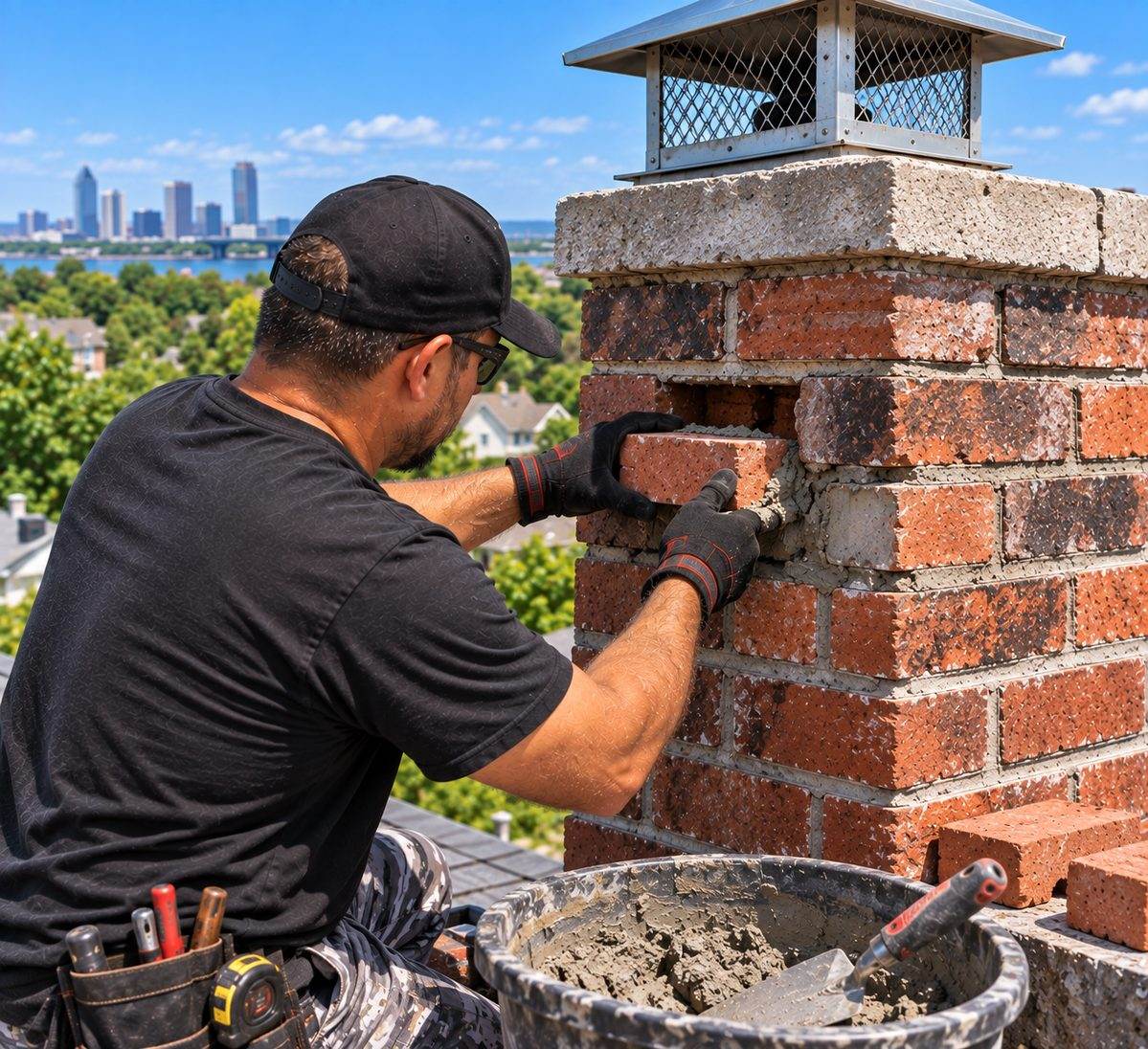
Historic St. Louis masonry may contain softer brick and lime-rich mortar that behave differently from modern assemblies. The mortar joint is part of the moisture and movement system, not merely filler. An overly hard replacement can transfer stress to brick edges and faces.
Chimney tuckpointing should account for existing mortar characteristics, joint profile, preparation, curing, and appearance. Damaged units may require selective chimney masonry repair. Paint, dense coatings, and aggressive cleaning can trap moisture or remove historic surfaces.
Water management remains essential. Crown, cap, and chimney flashing repair should work with the masonry rather than send runoff into joints. For designated properties, owners should check local preservation requirements before visible alterations.