
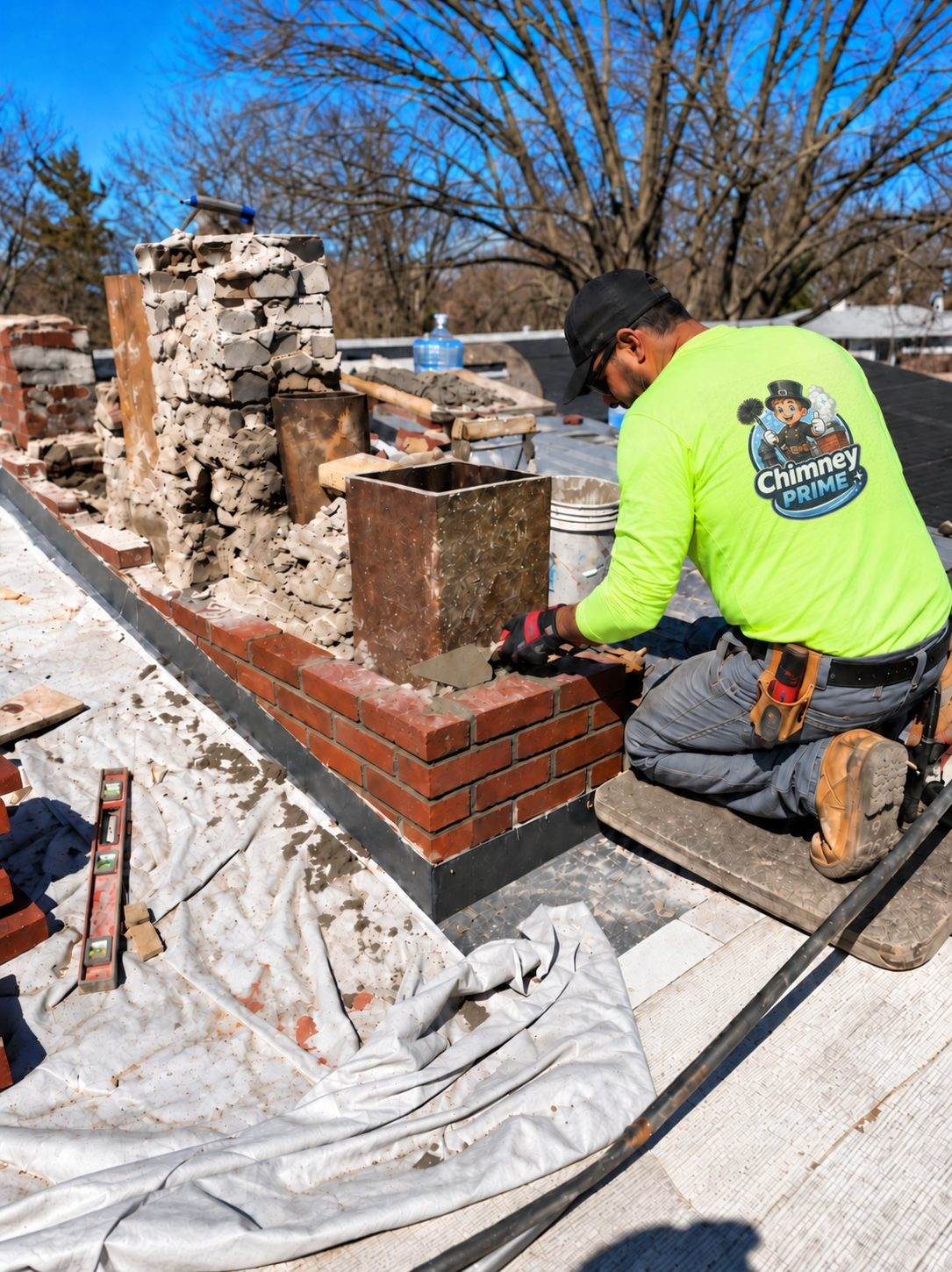
Chimney Rebuild
Sometimes a chimney is past the point where patching makes sense — the brick is spalling across whole courses, joints have failed throughout, or the stack is leaning.
Sometimes a chimney is past the point where patching makes sense — the brick is spalling across whole courses, joints have failed throughout, or the stack is leaning. A rebuild, partial or full, replaces the compromised masonry with sound work built to match, so you're not repairing the same failure every year.
Signs you may need chimney rebuild
- Widespread spalling and crumbling brick across the stack
- The chimney is visibly leaning, bowed, or separating
- Large sections of mortar have failed throughout
- Repeated repairs haven't kept up with the deterioration
- Storm or structural damage has compromised the masonry
What we check first
Good work starts with looking. Before we recommend anything, here is what we examine:
- How far the deterioration extends and whether it's structural
- Whether a partial rebuild of the affected section is enough
- The condition of the crown, flue, and base
- Brick and mortar matching for the rebuilt section
- The water source that drove the damage in the first place
How the work goes
Step
We assess how much of the chimney is sound versus compromised
Step
We determine whether a partial or full rebuild is warranted
Step
We take down the failed masonry to a sound base
Step
We rebuild with matched brick and appropriate mortar
Step
We integrate a proper crown, cap, and water protection
What can change the scope
Rebuild scope is defined by how much has to come down. Rebuilding the exposed portion above the roofline is common when the sheltered lower stack is still sound. A full rebuild is a bigger job reserved for chimneys that are compromised top to bottom.
Missouri considerations
Decades of Missouri freeze-thaw are what bring most chimneys to a rebuild. Once water has broken down the brick and joints across the stack, no amount of pointing keeps ahead of it, and rebuilding the affected section is the durable answer.
Repair or replace?
Localized damage on a sound structure is a repair. Widespread failure or a moving stack is a rebuild. We'll show you the evidence and give you a straight recommendation rather than stretching a repair that won't hold.
Keeping it in good shape
A rebuilt chimney with a proper crown, cap, and waterproofing starts its clock over. Keep up an annual look so the next round of weather doesn't quietly get a head start.
Why water is the problem behind most chimney repairs
Almost every masonry chimney repair traces back to the same culprit: water. A chimney sheds rain through a layered system — the crown throws water off the top, the cap covers the flue opening, the flashing seals the roof joint, and sound mortar joints keep the brick from soaking it up. When any one of those fails, water gets in, and Missouri's freeze-thaw winters do the rest, expanding inside cracks and joints until a hairline gap becomes spalled brick or a leak on your ceiling.
That's why the honest first step is finding where the water actually enters, not sealing the nearest stain. A leak that only shows in wind-driven rain points to flashing; one that appears after any rain often points to the crown or brick. Repairs that last address the entry point and match materials to the existing masonry — mortar matched in strength and color, brick matched in size and profile. Once the water path is closed, breathable waterproofing on sound masonry buys years of protection, but it is never a substitute for a real repair.
Frequently Asked Questions
Related reading from our blog
- Chimney Crown Repair vs. Rebuild in Missouri
Learn how crown condition, drainage, construction, and surrounding masonry help determine whether a Missouri chimney crown can be repaired or should be rebuilt. - How Often Should a Chimney Be Inspected in Missouri?
Learn when St. Louis and Kansas City homeowners need chimney inspections, what different inspection levels cover, and which warning signs should not wait. - A St. Louis Chimney Maintenance Calendar
Plan chimney care through St. Louis seasons, from spring leak observations and summer repairs to fall preparation and winter operating checks.
Request chimney rebuild
Tell us what's going on and we'll follow up to confirm details and set a time.
Ready to get on the schedule?
Tell us what's going on and we'll help you sort it out. Two Missouri hubs, 24/7 phone availability.