
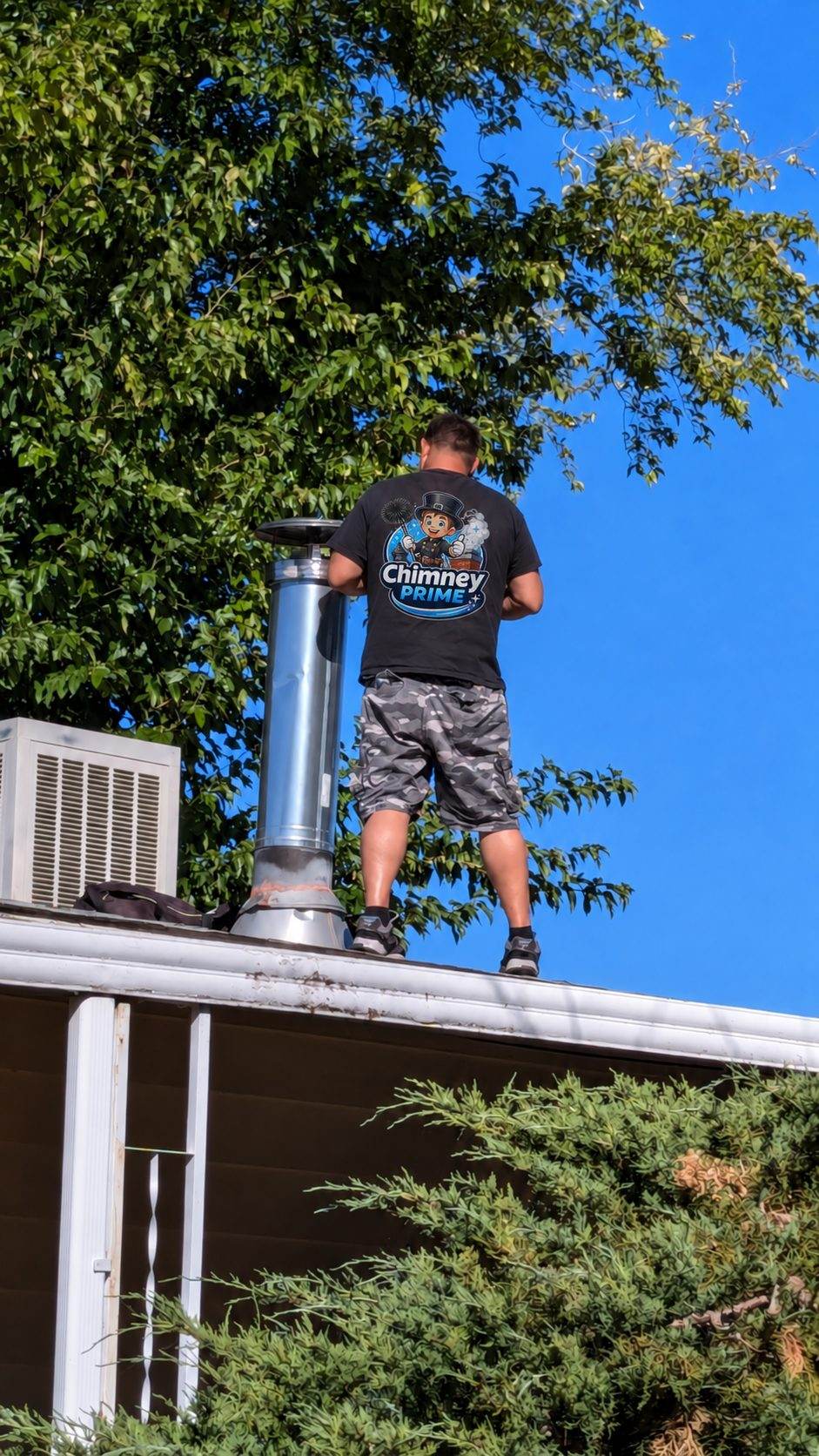
Stainless Steel Chimney Liner
Stainless steel is the workhorse of chimney liners — durable, corrosion-resistant, and suitable for wood, gas, and oil appliances.
Stainless steel is the workhorse of chimney liners — durable, corrosion-resistant, and suitable for wood, gas, and oil appliances. When a flue needs relining or a new appliance needs the right-sized flue, a properly sized and insulated stainless liner is a dependable long-term answer.
Signs you may need stainless steel chimney liner
- You need to reline a flue with cracked or missing tiles
- You're connecting a new wood stove, insert, or appliance
- You want a durable liner rated for your fuel
- A masonry flue is oversized for a new appliance
- You've had a chimney fire and need a fresh, sound liner
What we check first
Good work starts with looking. Before we recommend anything, here is what we examine:
- Appliance type and fuel to spec the correct liner
- Flue size, shape, and any offsets in the run
- Whether rigid or flexible liner suits the flue path
- Insulation needs for performance and clearance
- Termination and appliance connection details
How the work goes
Step
We size the stainless liner to your appliance and fuel
Step
We choose rigid or flexible based on the flue path
Step
We insulate the liner where appropriate
Step
We install it through the flue and connect it to the appliance
Step
We finish and seal the termination at the top
Materials & options
Stainless steel liners come in rigid sections for straight flues and flexible for offsets, in grades suited to different fuels. Insulation around the liner improves draft and maintains clearances. We match grade, size, and form to your system.
What can change the scope
The job is defined by the appliance, the fuel, and the flue path. Offsets, insulation, and appliance connections all factor in. Correct sizing to the appliance is what makes the difference between a liner that vents well and one that doesn't.
Missouri considerations
Stainless stands up to the moisture that Missouri chimneys deal with far better than aging clay tile. For a home that burns hard through the winter, a properly installed stainless liner is a durable, low-worry choice.
Repair or replace?
When a flue needs relining or a new appliance needs a matched flue, stainless is usually the go-to. We'll confirm the grade and size for your specific appliance and fuel rather than assuming one size fits all.
Keeping it in good shape
Keep the liner swept and inspected annually. Stainless is durable, but creosote and moisture still need managing, especially with heavy wood burning.
How the flue, liner, and damper work together
The flue is the passage that carries heat and combustion byproducts out of your home, and the liner is its inner shield — it protects the surrounding masonry and framing and helps the appliance vent correctly. When a liner cracks, gaps, or is the wrong size for a new appliance, heat and byproducts can reach places they shouldn't, which is why a camera inspection usually comes before any liner recommendation. Sizing matters as much as material: a liner has to match the appliance and fuel, not just fit the existing opening.
The damper controls that passage from below. A damper that won't seal lets your heated and cooled air escape up the chimney year-round; a rusted one is also a moisture clue, since it usually means water is getting past a failing cap or crown. Whether the answer is repairing a throat damper, adding a top-sealing damper, relining, or parging a rough smoke chamber, the goal is the same — a flue that drafts cleanly when you want it and seals tightly when you don't.
Frequently Asked Questions
Related reading from our blog
- Stainless-Steel Chimney Liners: Questions to Ask
Ask better questions about stainless liner sizing, alloy, insulation, tile removal, connections, listing, documentation, and appliance compatibility. - Chimney Liner Basics for Missouri Homeowners
Learn what chimney liners do, how clay and metal systems differ, and why inspection, appliance compatibility, sizing, and clearances matter. - How Often Should a Chimney Be Inspected in Missouri?
Learn when St. Louis and Kansas City homeowners need chimney inspections, what different inspection levels cover, and which warning signs should not wait.
Request stainless steel chimney liner
Tell us what's going on and we'll follow up to confirm details and set a time.
Ready to get on the schedule?
Tell us what's going on and we'll help you sort it out. Two Missouri hubs, 24/7 phone availability.