Chimney Sweeping & Cleaning
A chimney sweep isn't just about a tidy firebox.
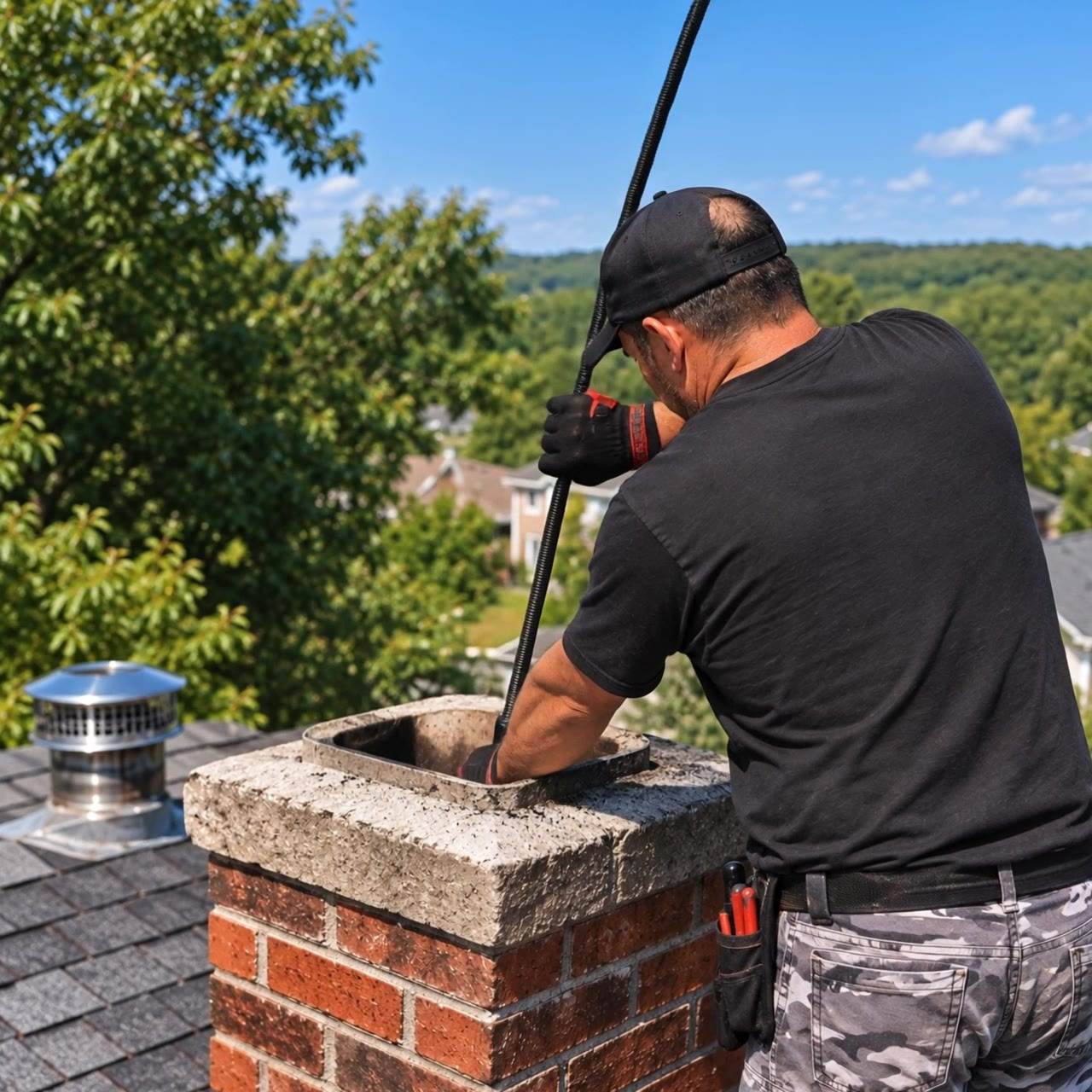
A chimney sweep isn't just about a tidy firebox. It's about removing the creosote and soot that build up every time you burn, before that buildup becomes a fire hazard or starts to block your draft. We sweep from the right end for your system, contain the mess, and look at what the brush turns up.
Signs you may need chimney sweeping & cleaning
- You burn wood regularly and it's been a year or more since the last cleaning
- A tarry, campfire smell drifts into the room on warm or humid days
- Dark flakes or gritty soot are falling into the firebox
- The fire seems lazy, slow to catch, or smokier than it used to be
- You're buying a home and want the flue cleared before the first fire
What we check first
Good work starts with looking. Before we recommend anything, here is what we examine:
- How much creosote is present and whether it's flaky, crusty, or hard glaze
- Whether the cap and screen are clear or packed with debris
- The condition of the damper and smoke shelf
- Any obvious cracking, spalling, or moisture staining we can see while we're in there
- Whether the buildup pattern hints at a draft or burning-practice problem
How the work goes
Step
We set drop cloths and run a HEPA vacuum at the firebox to keep soot out of your home
Step
We choose a top-down or bottom-up sweep based on your chimney and access
Step
We rod the flue with the correct brush size and work the full length
Step
We clear the smoke shelf, damper area, and cap screen
Step
We do a visual check of what we can reach and tell you what we found
What can change the scope
The biggest thing that changes a cleaning is the type of buildup. Light, flaky soot brushes out quickly. Crusty or honeycombed creosote takes more passes. Hard, shiny glaze (Stage 3 creosote) usually can't be brushed off at all and needs a different approach, which we'll explain rather than force a brush through it. Access, chimney height, and whether the cap has to come off also factor in.
Missouri considerations
Missouri's damp shoulder seasons make creosote smell worse — humidity pulls that sharp odor back down a dirty flue and into the living room. Burning unseasoned or wet wood, common when the weather turns fast in the fall, lays down creosote quicker than most people expect.
Keeping it in good shape
Burn seasoned, dry wood, give the fire enough air to run cleanly, and plan on a check every heating season. Regular sweeping keeps the flue readable, so a small problem shows up while it's still small.
What a thorough inspection actually tells you
It helps to know the difference between cleaning and inspection before you book. Cleaning removes creosote, soot, and debris; an inspection evaluates the condition of the components — crown, cap, flue lining, flashing, firebox, damper, and smoke chamber — within a defined scope. You can have a spotless flue that still has a cracked tile or a failing crown, which is why a clean chimney is not the same thing as an inspected, sound one.
Inspection levels describe scope and access, not a grade. A Level 1 fits a familiar system in continued use; a Level 2 adds a camera pass through the flue and is the right call after a home purchase, a fuel or appliance change, a chimney fire, or when a hidden condition is suspected. A good visit ends with more than "we cleaned it" — you should get a plain-language read on what's fine, what to watch, and what genuinely needs work, with photos of anything that matters and an honest note about any surface that couldn't be seen.
Frequently Asked Questions
Related reading from our blog
- Chimney Cleaning vs. Inspection: What You Are Booking
Compare chimney cleaning and inspection, understand camera work and service limits, and learn what documentation to request for your Missouri home. - Dryer Vent Cleaning: Why Chimney Companies Offer It
Learn how lint, long runs, elbows, crushed ducts, and roof exits affect dryer vent performance. - How Often Should a Chimney Be Inspected in Missouri?
Learn when St. Louis and Kansas City homeowners need chimney inspections, what different inspection levels cover, and which warning signs should not wait.
Request chimney sweeping & cleaning
Tell us what's going on and we'll follow up to confirm details and set a time.
Ready to get on the schedule?
Tell us what's going on and we'll help you sort it out. Two Missouri hubs, 24/7 phone availability.