Fireplace Repair
A fireplace that's cracked, smoking, or just hasn't been used in years deserves a proper look before you light it.
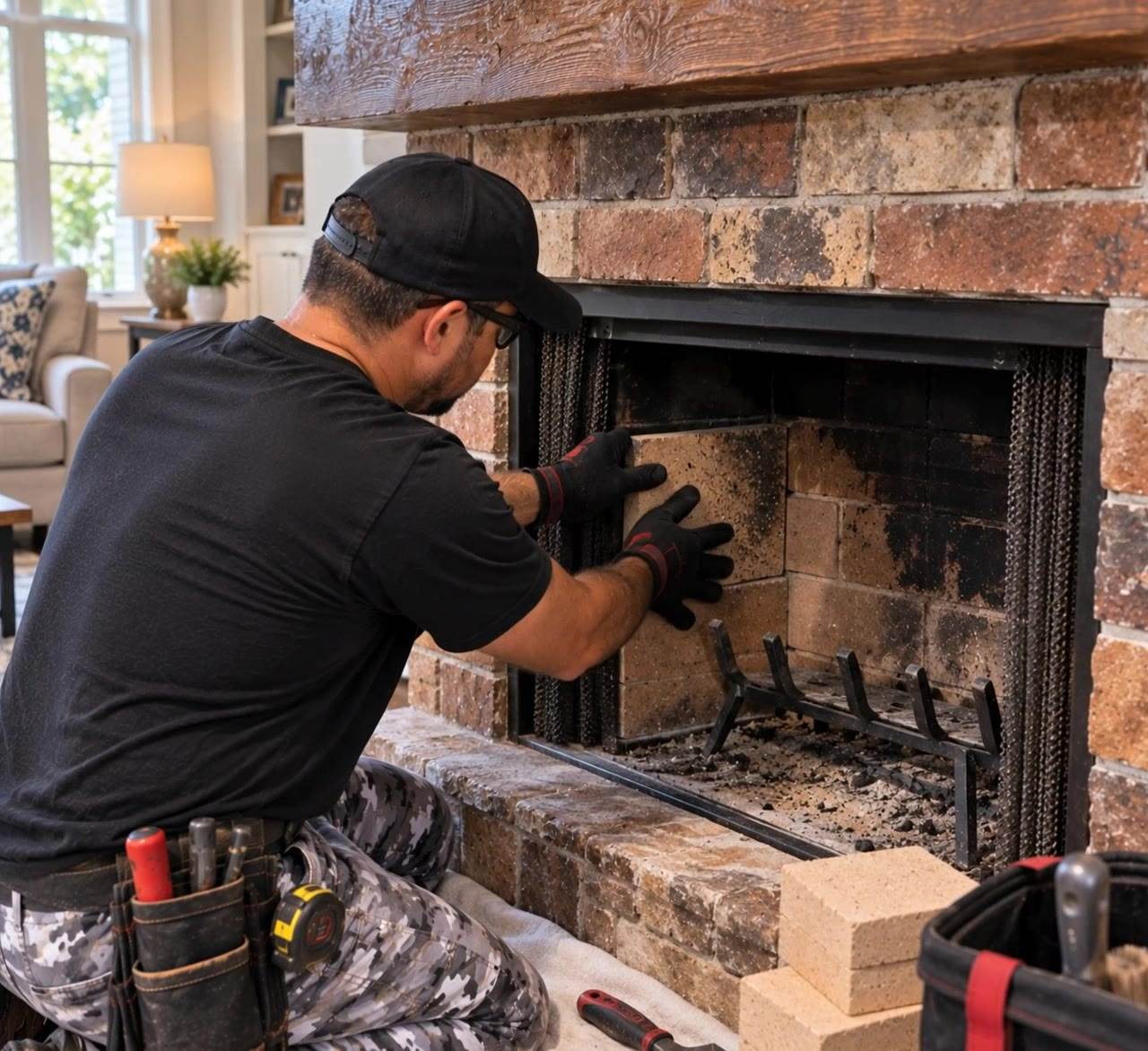
A fireplace that's cracked, smoking, or just hasn't been used in years deserves a proper look before you light it. We repair masonry, prefab, and gas fireplaces — firebox, damper, and the transition into the flue — and tell you honestly what it needs to be safe to burn.
Signs you may need fireplace repair
- Cracks in the firebox panels or firebrick
- The fireplace smokes or won't draft properly
- Rust, gaps, or damage around the firebox or damper
- The fireplace hasn't been used in years
- A gas unit lights poorly or the flame looks wrong
What we check first
Good work starts with looking. Before we recommend anything, here is what we examine:
- Firebox panels or firebrick for cracks and deterioration
- Damper operation and the smoke chamber above
- The transition from firebox into the flue
- For gas units, the connection, glass, and venting (visual)
- Clearances and any signs of past overheating
How the work goes
Step
We ask how the fireplace is used and what's wrong
Step
We inspect the firebox, damper, and venting path
Step
We diagnose the actual cause rather than guessing
Step
We repair what's needed and flag anything requiring a specialist
Step
We confirm it's safe before you burn again
What can change the scope
Fireplace repair covers a wide range, so the work depends on the system and the problem. A cracked firebox, a failed damper, and a smoking gas unit are three very different jobs. Gas-supply work in particular may require a qualified gas trade, which we'll tell you.
Missouri considerations
Missouri's humid off-season is hard on an idle fireplace — moisture rusts dampers and works into firebox cracks. A pre-season repair means the fireplace is ready when the first cold night arrives, not out of service.
Repair or replace?
Small, surface issues are often straightforward repairs. Widespread firebox damage or a compromised prefab unit may point to a rebuild or replacement. We'll give you the honest comparison.
Keeping it in good shape
Have the fireplace and chimney checked each year before burning. Burn dry, seasoned wood, don't overfire, and address small cracks before they grow.
Masonry, prefab, and gas are three different systems
A big part of getting fireplace work right is knowing which system you have. A masonry fireplace is built from firebrick and refractory mortar rated for direct heat. A factory-built (prefab) fireplace is a metal unit with model-specific refractory panels and parts — improvised substitutes can make it unsafe. A gas system adds ignition, a burner, and venting that behave differently again. The correct repair, and the correct parts, depend entirely on which of these is in your home.
That's also why we're upfront about scope. Cracked firebrick, worn refractory panels, a smoking firebox, and a gas unit that won't light are four different jobs. Work involving the gas supply itself may require a licensed gas professional, and we'll coordinate or refer that rather than working outside safe scope. Whatever the system, an annual look before the burning season keeps a small, repairable issue from becoming a mid-winter failure — and keeps the fireplace safe to enjoy.
Frequently Asked Questions
Related reading from our blog
- Why Fireplace Smoke Comes Into the Room
Learn why fireplace smoke may spill into a St. Louis or Kansas City home, what observations help diagnose draft, and when to stop using the system. - Chimney Crown Repair vs. Rebuild in Missouri
Learn how crown condition, drainage, construction, and surrounding masonry help determine whether a Missouri chimney crown can be repaired or should be rebuilt. - Firebox Cracks: Cosmetic or a Repair Warning?
Learn how crack location, depth, movement, loose firebrick, and fireplace construction affect repair decisions inside a masonry firebox.
Request fireplace repair
Tell us what's going on and we'll follow up to confirm details and set a time.
Ready to get on the schedule?
Tell us what's going on and we'll help you sort it out. Two Missouri hubs, 24/7 phone availability.