Chimney Inspection
An inspection is where good chimney work starts.
An inspection is where good chimney work starts. Before anyone recommends a repair, someone should actually look — at the crown, the cap, the flue lining, the flashing, and the firebox — and tell you plainly what's going on. That's what our inspection is for.
Signs you may need chimney inspection
- You've noticed water stains, odors, or smoke problems and want the cause found
- It's been years, or you don't know, since the chimney was last checked
- You just bought the home or are about to sell
- You're switching fuels or adding an insert and need the flue evaluated
- A storm may have damaged the crown, cap, or flashing
What we check first
Good work starts with looking. Before we recommend anything, here is what we examine:
- Crown for cracks, and cap for damage or blockage
- Flue lining for cracks, gaps, or missing tiles
- Flashing and the roof-to-chimney seal
- Firebox, damper, and smoke chamber condition
- Signs of past water entry, staining, or spalling brick
How the work goes
Step
We talk through what you've noticed and how the fireplace gets used
Step
We work through the readily accessible parts of the system, inside and out
Step
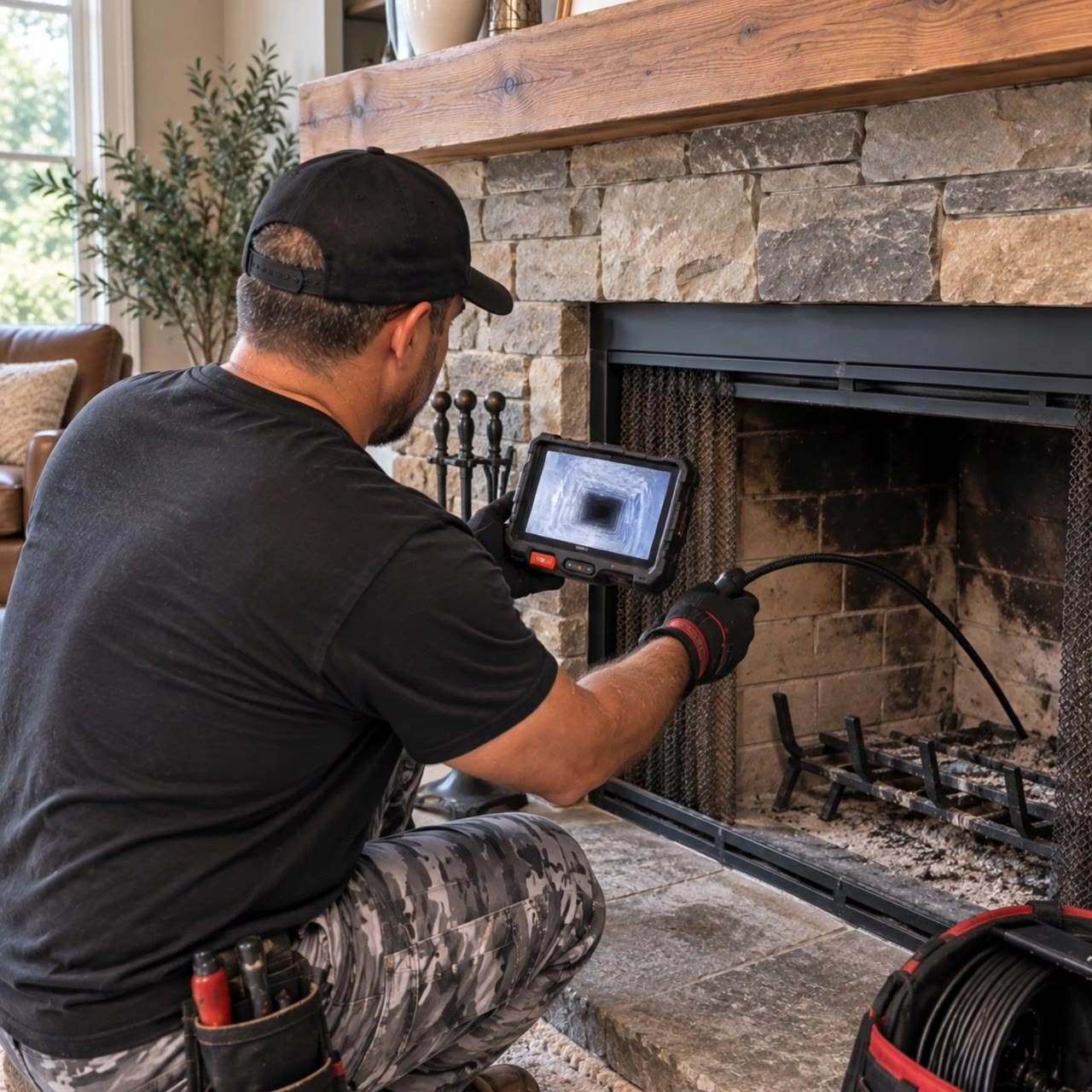
We add a camera pass when a concealed condition needs a closer look
Step
We photograph what matters so you can see it too
Step
We give you a clear read: what's fine, what to watch, and what needs work
What can change the scope
Inspections come in levels. A basic look at readily accessible parts covers most routine situations. When there's a specific concern, a property sale, or a fuel change, a camera inspection of the flue interior is the honest way to see what's hidden. The right level depends on your reason for calling.
Missouri considerations
Missouri's freeze-thaw swings are hard on masonry. Water that soaks into a crown or joint in a wet week can freeze that night and pry the material apart. Catching those small openings during an inspection is what keeps a minor seal job from turning into a rebuild.
Keeping it in good shape
Keep a copy of your inspection photos. When you compare them year over year, changes stand out fast, and you can plan repairs on your schedule instead of during an emergency.
What a thorough inspection actually tells you
It helps to know the difference between cleaning and inspection before you book. Cleaning removes creosote, soot, and debris; an inspection evaluates the condition of the components — crown, cap, flue lining, flashing, firebox, damper, and smoke chamber — within a defined scope. You can have a spotless flue that still has a cracked tile or a failing crown, which is why a clean chimney is not the same thing as an inspected, sound one.
Inspection levels describe scope and access, not a grade. A Level 1 fits a familiar system in continued use; a Level 2 adds a camera pass through the flue and is the right call after a home purchase, a fuel or appliance change, a chimney fire, or when a hidden condition is suspected. A good visit ends with more than "we cleaned it" — you should get a plain-language read on what's fine, what to watch, and what genuinely needs work, with photos of anything that matters and an honest note about any surface that couldn't be seen.
Frequently Asked Questions
Related reading from our blog
- How Often Should a Chimney Be Inspected in Missouri?
Learn when St. Louis and Kansas City homeowners need chimney inspections, what different inspection levels cover, and which warning signs should not wait. - How to Read a Chimney Inspection Report
Understand scope, observations, limitations, photos, priorities, and repair options in a chimney inspection report. - Chimney Cleaning vs. Inspection: What You Are Booking
Compare chimney cleaning and inspection, understand camera work and service limits, and learn what documentation to request for your Missouri home.
Request chimney inspection
Tell us what's going on and we'll follow up to confirm details and set a time.
Ready to get on the schedule?
Tell us what's going on and we'll help you sort it out. Two Missouri hubs, 24/7 phone availability.