Level 2 Camera Chimney Inspection
Some of the most important parts of a chimney are the parts you can't see from the top or the firebox.
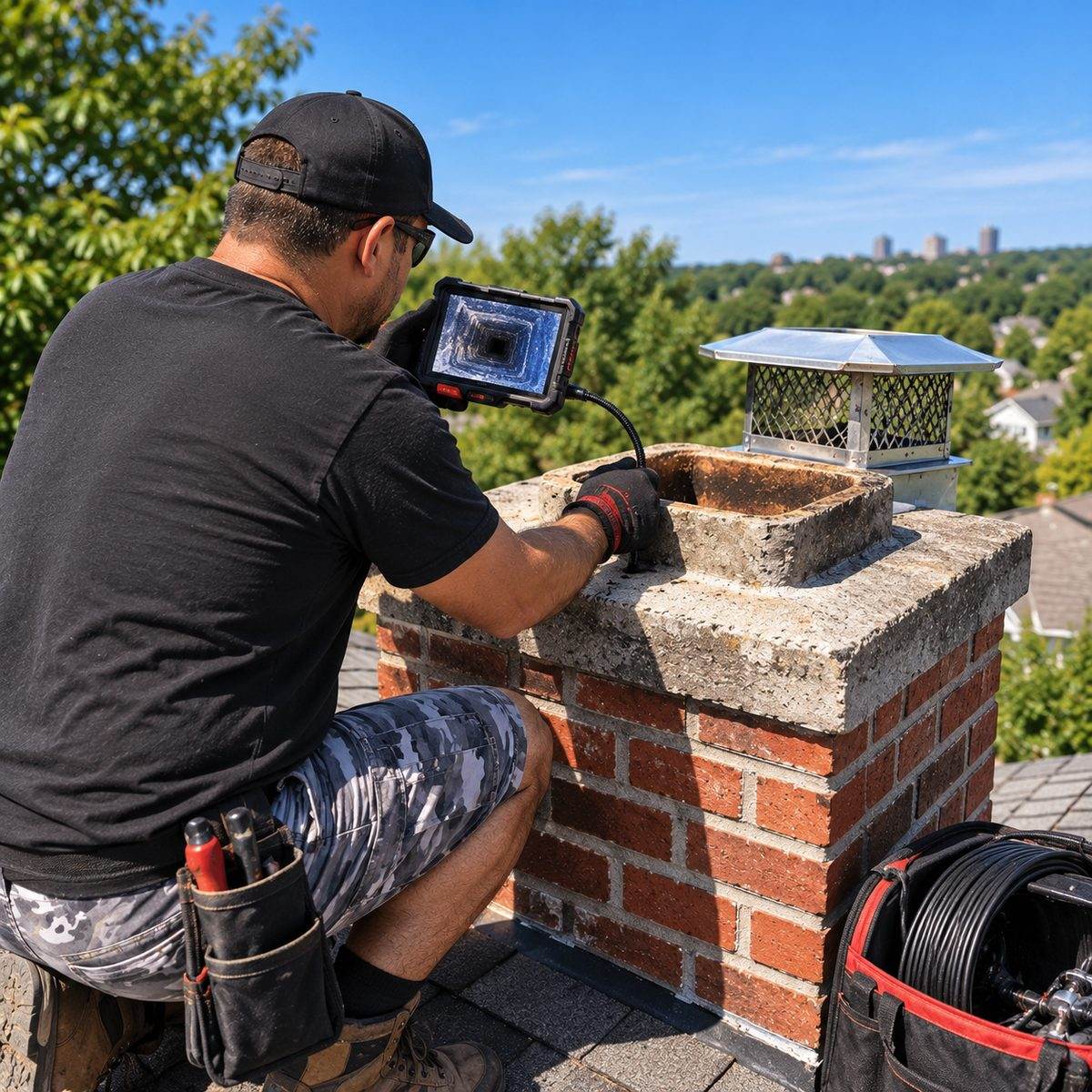
Some of the most important parts of a chimney are the parts you can't see from the top or the firebox. A Level 2 inspection runs a camera through the flue so cracked tiles, gaps in the lining, and hidden buildup show up on screen instead of staying a mystery.
Signs you may need level 2 camera chimney inspection
- You're buying or selling a home and need the flue documented
- You're changing fuels or installing a new insert or appliance
- There's been a chimney fire, a lightning strike, or a serious storm
- A basic inspection turned up something that needs a closer look
- You suspect a hidden crack behind recurring moisture or draft issues
What we check first
Good work starts with looking. Before we recommend anything, here is what we examine:
- Full flue interior on camera, tile by tile
- Joints and mortar between flue tiles for gaps
- Liner integrity and any breaches to surrounding masonry
- Smoke chamber and transition areas
- Accessible areas covered by a Level 1, plus the concealed flue
How the work goes
Step
We review why the deeper look is needed and what to focus on
Step
We complete the accessible Level 1 checks first
Step
We run a chimney camera through the flue and record the pass
Step
We show you the footage and freeze on anything that matters
Step
We give you a written read and, if needed, a repair plan
What can change the scope
A camera inspection is about evidence. What changes the visit is mostly access and flue condition — a flue packed with glaze has to be cleaned before the camera can see anything, and offset or multi-flue chimneys take more time to document fully.
Missouri considerations
A concealed flue crack is exactly the kind of defect Missouri winters exploit. Combustion moisture and rain get into a hairline gap, freeze, and widen it season after season. A camera is the only way to catch that early, before it becomes a liner failure.
Keeping it in good shape
Keep the recorded footage. If you ever sell, switch fuels, or have a chimney fire, that baseline makes the next inspection far more useful.
What a thorough inspection actually tells you
It helps to know the difference between cleaning and inspection before you book. Cleaning removes creosote, soot, and debris; an inspection evaluates the condition of the components — crown, cap, flue lining, flashing, firebox, damper, and smoke chamber — within a defined scope. You can have a spotless flue that still has a cracked tile or a failing crown, which is why a clean chimney is not the same thing as an inspected, sound one.
Inspection levels describe scope and access, not a grade. A Level 1 fits a familiar system in continued use; a Level 2 adds a camera pass through the flue and is the right call after a home purchase, a fuel or appliance change, a chimney fire, or when a hidden condition is suspected. A good visit ends with more than "we cleaned it" — you should get a plain-language read on what's fine, what to watch, and what genuinely needs work, with photos of anything that matters and an honest note about any surface that couldn't be seen.
Frequently Asked Questions
Related reading from our blog
- How Often Should a Chimney Be Inspected in Missouri?
Learn when St. Louis and Kansas City homeowners need chimney inspections, what different inspection levels cover, and which warning signs should not wait. - Chimney Cleaning vs. Inspection: What You Are Booking
Compare chimney cleaning and inspection, understand camera work and service limits, and learn what documentation to request for your Missouri home. - Chimney Inspection After a Suspected Chimney Fire
Know what to do after roaring, sparks, dense smoke, or other signs of a possible chimney fire.
Request level 2 camera chimney inspection
Tell us what's going on and we'll follow up to confirm details and set a time.
Ready to get on the schedule?
Tell us what's going on and we'll help you sort it out. Two Missouri hubs, 24/7 phone availability.