Real Estate Chimney Inspection
A general home inspection rarely covers the inside of a flue.
A general home inspection rarely covers the inside of a flue. When a chimney is part of the deal, a dedicated real-estate inspection gives everyone a documented, honest picture of the system's condition — so there are no surprises after closing.
Signs you may need real estate chimney inspection
- You're under contract and the chimney needs to be evaluated before closing
- A general inspector flagged the chimney and recommended a specialist
- You're listing a home with a fireplace and want to get ahead of questions
- The fireplace hasn't been used in years and its condition is unknown
What we check first
Good work starts with looking. Before we recommend anything, here is what we examine:
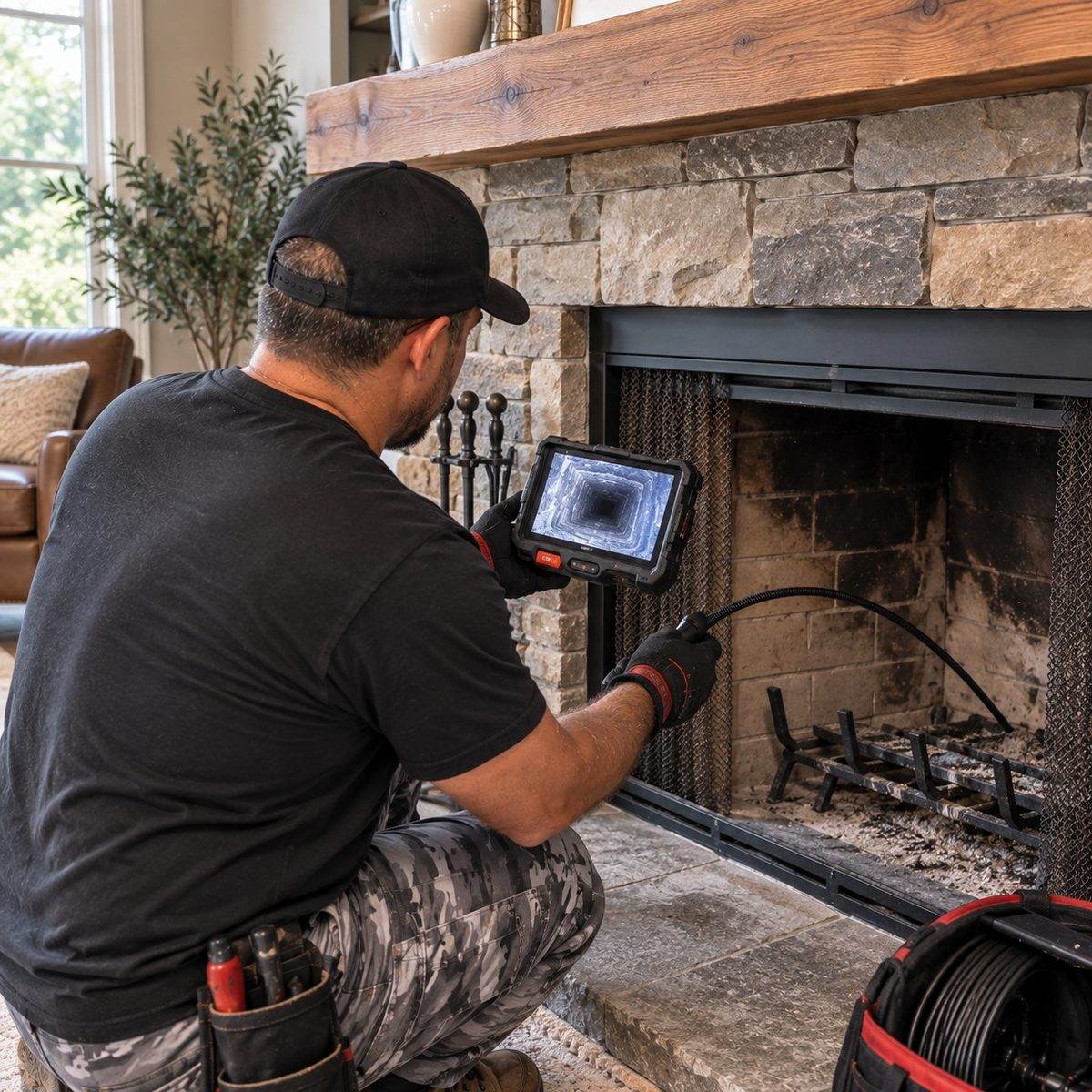
- Flue interior on camera, documented for the file
- Crown, cap, and flashing for water-entry paths
- Firebox, damper, and smoke chamber condition
- Signs the system was used, altered, or left unmaintained
- Anything that would affect safe use by the next owner
How the work goes
Step
We coordinate timing with the transaction and access to the property
Step
We run a Level 2 camera inspection of the flue
Step
We document exterior and interior conditions with photos
Step
We deliver a clear, plain-language report you can share
Step
We outline any repairs so both sides can negotiate from facts
What can change the scope
The visit is scoped to give a decision-ready report. If the flue is too dirty to read, we'll flag that a cleaning is needed for a complete evaluation rather than sign off on a flue we couldn't actually see.
Missouri considerations
Older St. Louis and Kansas City housing stock often has decades-old masonry chimneys. Missouri freeze-thaw and humidity mean a chimney that looks fine from the ground can have crown cracks or liner gaps that only a documented inspection will surface.
Keeping it in good shape
Keep the report and footage with your closing documents. For a buyer, it's the baseline for future maintenance; for a seller, it's proof the system was disclosed honestly.
What a thorough inspection actually tells you
It helps to know the difference between cleaning and inspection before you book. Cleaning removes creosote, soot, and debris; an inspection evaluates the condition of the components — crown, cap, flue lining, flashing, firebox, damper, and smoke chamber — within a defined scope. You can have a spotless flue that still has a cracked tile or a failing crown, which is why a clean chimney is not the same thing as an inspected, sound one.
Inspection levels describe scope and access, not a grade. A Level 1 fits a familiar system in continued use; a Level 2 adds a camera pass through the flue and is the right call after a home purchase, a fuel or appliance change, a chimney fire, or when a hidden condition is suspected. A good visit ends with more than "we cleaned it" — you should get a plain-language read on what's fine, what to watch, and what genuinely needs work, with photos of anything that matters and an honest note about any surface that couldn't be seen.
Frequently Asked Questions
Related reading from our blog
- How Often Should a Chimney Be Inspected in Missouri?
Learn when St. Louis and Kansas City homeowners need chimney inspections, what different inspection levels cover, and which warning signs should not wait. - Chimney Cleaning vs. Inspection: What You Are Booking
Compare chimney cleaning and inspection, understand camera work and service limits, and learn what documentation to request for your Missouri home. - Chimney Inspection After a Suspected Chimney Fire
Know what to do after roaring, sparks, dense smoke, or other signs of a possible chimney fire.
Request real estate chimney inspection
Tell us what's going on and we'll follow up to confirm details and set a time.
Ready to get on the schedule?
Tell us what's going on and we'll help you sort it out. Two Missouri hubs, 24/7 phone availability.