Chimney Cap Installation & Replacement
A chimney cap is a small part that does three big jobs: it keeps rain out of the flue, keeps animals from nesting inside, and its screen stops embers from landing on the roof.
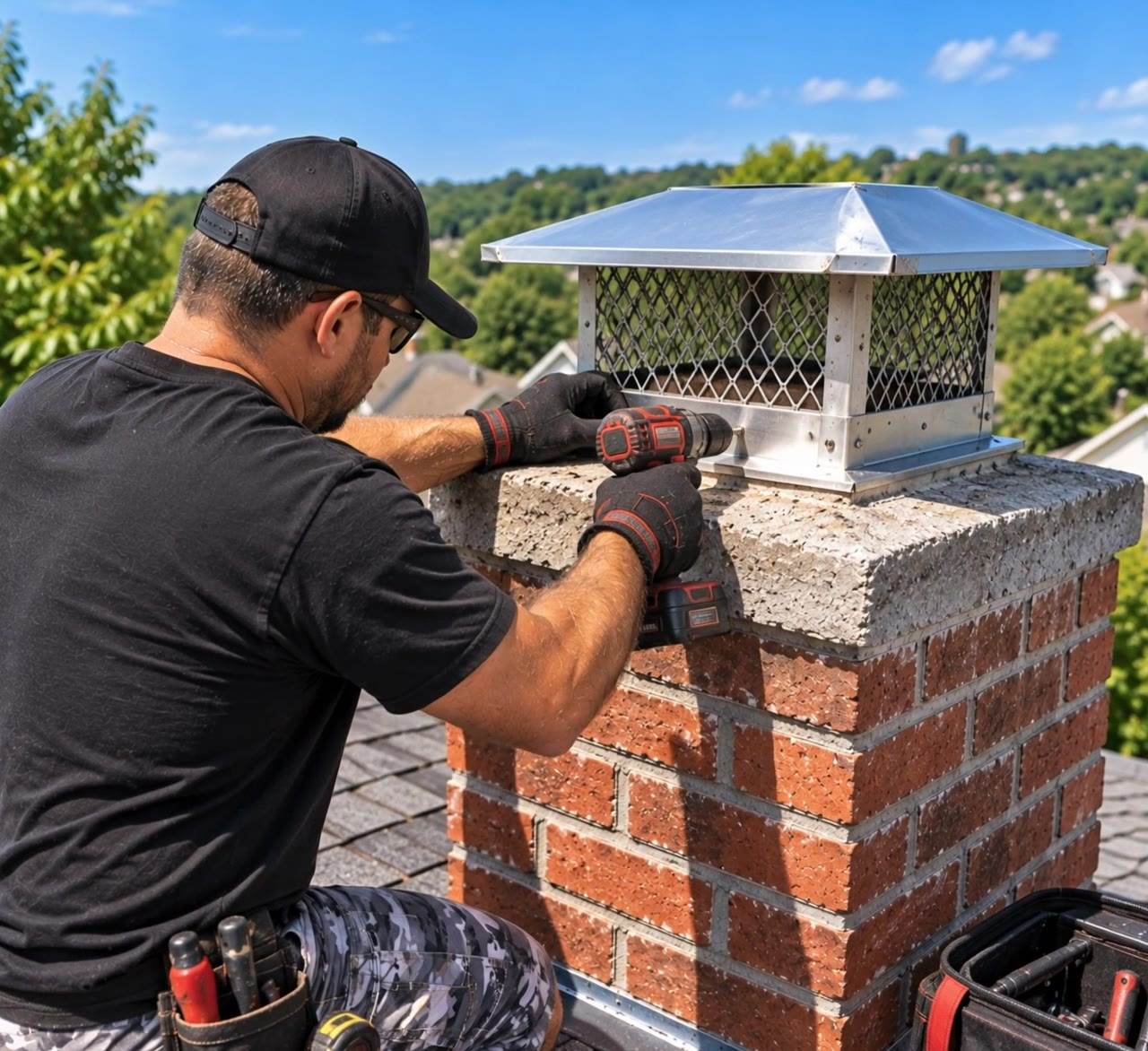
A chimney cap is a small part that does three big jobs: it keeps rain out of the flue, keeps animals from nesting inside, and its screen stops embers from landing on the roof. If yours is missing, rusted, or the wrong size, replacing it is one of the cheapest ways to prevent expensive problems.
Signs you may need chimney cap installation & replacement
- You have no cap at all over the flue
- The existing cap is rusted, dented, or loose
- Animals or debris have been getting into the chimney
- You've found rain or moisture in the firebox or smoke shelf
- The screen is torn, clogged, or missing
What we check first
Good work starts with looking. Before we recommend anything, here is what we examine:
- Flue size and shape to size the cap correctly
- Whether it's a single flue, multiple flues, or a chase
- Condition of the crown or chase top the cap mounts to
- Existing cap for rust, fit, and screen condition
- Whether a standard or custom cap is the right fit
How the work goes
Step
We measure the flue or chase for a correct fit
Step
We recommend a cap style and material suited to your chimney
Step
We remove the old cap if there is one
Step
We mount and secure the new cap so it stays put in wind
Step
We confirm the screen is sound and the fit is weather-tight
Materials & options
Caps come in galvanized, stainless steel, and copper. Stainless holds up well against Missouri weather and is a common choice; copper is a premium look that lasts. Single-flue, multi-flue, and full-width chase covers each fit a different chimney top.
What can change the scope
A standard single-flue cap is a quick job. Multiple flues, an odd flue size, or a full chase that needs a custom cover take more. If the crown or chase top the cap mounts to is damaged, that may need attention first.
Missouri considerations
An uncapped flue in Missouri collects rain and snow that rusts the damper, soaks the smoke shelf, and speeds up masonry damage. The cap is the first line of defense against the water that causes most of what we repair.
Repair or replace?
A rusted or ill-fitting cap should be replaced, not patched. If you've never had one, adding a properly sized cap is close to a no-brainer for what it prevents.
Keeping it in good shape
Have the cap and screen checked each year. Screens can clog with soot or tear, and a dislodged cap in a storm quietly reopens the chimney to rain and animals.
Why water is the problem behind most chimney repairs
Almost every masonry chimney repair traces back to the same culprit: water. A chimney sheds rain through a layered system — the crown throws water off the top, the cap covers the flue opening, the flashing seals the roof joint, and sound mortar joints keep the brick from soaking it up. When any one of those fails, water gets in, and Missouri's freeze-thaw winters do the rest, expanding inside cracks and joints until a hairline gap becomes spalled brick or a leak on your ceiling.
That's why the honest first step is finding where the water actually enters, not sealing the nearest stain. A leak that only shows in wind-driven rain points to flashing; one that appears after any rain often points to the crown or brick. Repairs that last address the entry point and match materials to the existing masonry — mortar matched in strength and color, brick matched in size and profile. Once the water path is closed, breathable waterproofing on sound masonry buys years of protection, but it is never a substitute for a real repair.
Frequently Asked Questions
Related reading from our blog
- Chimney Cap vs. Chase Cover: What Is the Difference?
Compare chimney caps, chase covers, crowns, and flashing, learn which system your Missouri home may have, and understand common water-entry clues. - Repair Before Replace: When It Works and When It Does Not
Learn when targeted chimney repair can preserve sound work and when replacement is the more responsible option. - How Often Should a Chimney Be Inspected in Missouri?
Learn when St. Louis and Kansas City homeowners need chimney inspections, what different inspection levels cover, and which warning signs should not wait.
Request chimney cap installation & replacement
Tell us what's going on and we'll follow up to confirm details and set a time.
Ready to get on the schedule?
Tell us what's going on and we'll help you sort it out. Two Missouri hubs, 24/7 phone availability.