
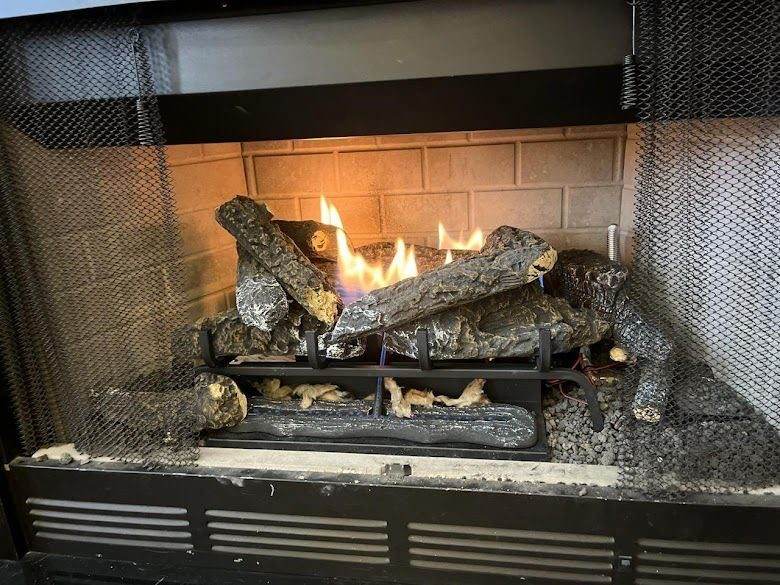
Gas Log Set Installation
A gas log set gives you the look of a wood fire with the flip of a switch — no hauling wood, no ash, no creosote.
A gas log set gives you the look of a wood fire with the flip of a switch — no hauling wood, no ash, no creosote. We help you choose between vented and vent-free sets for your fireplace and make sure it's installed and vented correctly, coordinating gas-supply work with a qualified trade where needed.
Signs you may need gas log set installation
- You want the look of a fire without the work of burning wood
- You're tired of hauling wood, ash, and dealing with creosote
- Your existing fireplace could be converted to gas logs
- You want to compare vented and vent-free options
- Your old gas logs are worn and need replacing
What we check first
Good work starts with looking. Before we recommend anything, here is what we examine:
- Your fireplace and flue to confirm suitability
- Whether a vented or vent-free set fits your situation
- The gas supply availability and connection point
- Firebox size for correct log-set sizing
- Damper and venting setup for the chosen set
How the work goes
Step
We review your fireplace and what you want from it
Step
We help you choose a vented or vent-free set and size it
Step
We coordinate gas-supply connection with a qualified trade as needed
Step
We install and position the log set correctly
Step
We confirm proper operation and venting setup
Materials & options
Gas log sets come vented (realistic flame, requires an open flue) and vent-free (more heat efficiency, with its own requirements and considerations). The right choice depends on your fireplace, your goals, and local requirements, which we'll walk through.
What can change the scope
The install depends on the set type, your gas supply, and your fireplace. Vented and vent-free sets have different venting and clearance requirements. Gas-supply connection may require a licensed gas professional, which we coordinate.
Missouri considerations
For Missouri winters, gas logs are an easy way to get reliable warmth and ambiance without the wood-burning routine — no seasoning wood, no creosote to sweep, and heat on demand when the temperature drops.
Repair or replace?
Vented sets look the most like a real fire; vent-free sets put out more heat but have their own requirements. We'll help you weigh appearance, heat, and your fireplace's setup rather than pushing one option.
Keeping it in good shape
Have the set and fireplace checked yearly, keep the logs positioned as designed, and follow the manufacturer's guidance for your set type.
Masonry, prefab, and gas are three different systems
A big part of getting fireplace work right is knowing which system you have. A masonry fireplace is built from firebrick and refractory mortar rated for direct heat. A factory-built (prefab) fireplace is a metal unit with model-specific refractory panels and parts — improvised substitutes can make it unsafe. A gas system adds ignition, a burner, and venting that behave differently again. The correct repair, and the correct parts, depend entirely on which of these is in your home.
That's also why we're upfront about scope. Cracked firebrick, worn refractory panels, a smoking firebox, and a gas unit that won't light are four different jobs. Work involving the gas supply itself may require a licensed gas professional, and we'll coordinate or refer that rather than working outside safe scope. Whatever the system, an annual look before the burning season keeps a small, repairable issue from becoming a mid-winter failure — and keeps the fireplace safe to enjoy.
A note on gas: work involving the gas supply itself may require a licensed gas professional. We diagnose and handle what's in our scope and coordinate or refer gas-line work so it's done safely. If you ever smell gas, leave the home and call your gas utility or 911 first.
Frequently Asked Questions
Related reading from our blog
- Choosing Gas Logs for an Existing Fireplace
Learn how fireplace type, venting, fuel, measurements, clearances, controls, heat goals, and manufacturer instructions guide gas-log selection. - Gas Fireplace Will Not Turn On: Safe First Steps
Follow safe, model-specific checks when a gas fireplace will not start and learn when gas odor, alarms, repeated ignition, or component faults require professional help. - Gas Fireplace Maintenance Before a Missouri Winter
Prepare a gas fireplace for winter with model identification, safe cleaning, vent checks, battery planning, alarm testing, and professional service when warning signs appear.
Request gas log set installation
Tell us what's going on and we'll follow up to confirm details and set a time.
Ready to get on the schedule?
Tell us what's going on and we'll help you sort it out. Two Missouri hubs, 24/7 phone availability.