
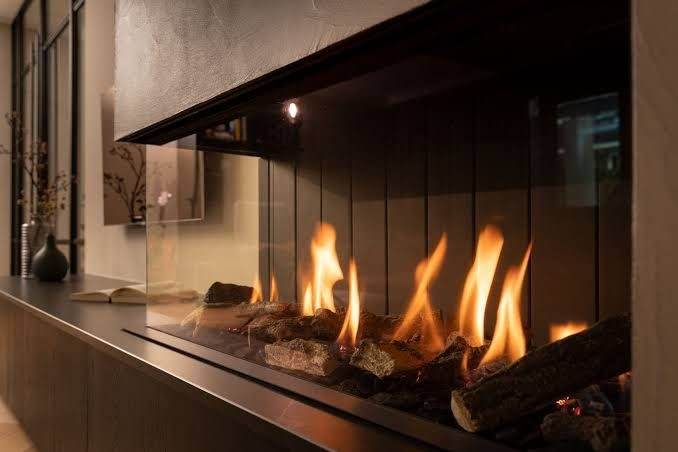
The first cold evening is a poor time to discover that a gas fireplace will not ignite, shuts down after a minute, or produces soot. A useful preseason routine begins before the appliance is needed: identify the model, find the manual, observe the glass and firebox, check only user-serviceable controls, look at the outdoor termination from a safe place, test household alarms, and schedule qualified service for abnormal conditions.
Gas fireplaces are not one category. A sealed direct-vent unit, a natural-draft appliance, vented gas logs in a masonry fireplace, and a vent-free product where permitted have different maintenance and venting requirements. Do not copy a checklist from a similar-looking installation. Use the actual manual and a model-aware gas fireplace repair provider.
On this page
- Locate the manufacturer, model, and manual
- Start with the fireplace completely cool
- Clean only what the owner’s manual permits
- Do not rearrange logs, embers, or media
- Replace batteries before they leak or fail
- Check the outdoor termination from the ground
- Test smoke and carbon-monoxide alarms
- Keep the clearance zone clear
- Observe ignition and flame behavior
- Professional service goes beyond cosmetic cleaning
- Water and rust should be handled before winter use
- Plan for power outages correctly
- Missouri winter timing matters
- Frequently asked questions
Locate the manufacturer, model, and manual
Record the full model and serial number from a safely accessible rating plate or prior documents. Also note natural gas or propane, ignition type, remote or wall-control model, and any blower. Do not remove sealed glass, refractory panels, or gas components to hunt for a label.
Download the current owner and installation documents from the manufacturer’s official source. Heat & Glo’s maintenance page, for example, directs owners to first identify the exact model and serial number before retrieving manuals. That is good practice for any brand. Heat & Glo care and maintenance.
Keep the manual with prior service invoices and replacement-part information. A technician can work more efficiently when the unit is identified before the visit, and the homeowner can distinguish permitted cleaning from service access.
Start with the fireplace completely cool
Turn the appliance off according to its manual and allow all glass, metal, logs, and media to cool. Some surfaces remain hot well after flames disappear. Protective screens reduce accidental contact but are not a signal that glass is cool.
Look through the viewing area before opening anything. Note white haze, black soot, cracked glass, displaced gasket, chipped panels, rust, water stains, loose trim, or a screen that no longer attaches correctly. Photograph unusual conditions.
Do not operate with cracked or improperly latched glass. On sealed direct-vent units, the glass is part of the combustion enclosure. Do not use the fireplace as an open-front unit.
Clean only what the owner’s manual permits
Manufacturer-approved glass cleaner and a soft material may be specified for the inside of certain cooled glass assemblies. Household ammonia, oven cleaner, razor blades, abrasives, and wet cleaning on hot glass can damage coatings or surfaces. Some deposits require service evaluation rather than harder scrubbing.
If the manual allows homeowner glass removal, follow every shutdown, latch, gasket, and reinstallation step. If any step is unclear or the gasket is damaged, stop and request service. A poor seal can change appliance operation.
Vacuuming around external louvers or accessible compartments may be permitted, but burner, pilot, valve, wiring, and firebox cleaning can require a technician. Never use compressed air, wire, or a needle on gas openings.
Do not rearrange logs, embers, or media
Ceramic logs and decorative media are placed according to a model-specific diagram. Their position affects flame travel, ignition, soot, and heat. A log moved slightly during dusting can impinge on flame and create black deposits or delayed ignition.
Photograph placement before any manual-approved cleaning. Remove or reposition components only when the owner instructions explicitly allow it. Use the specified amount and type of embers, stones, or glass; adding extra material for a fuller appearance can block ports.
If a prior owner changed the media or the diagram is unavailable, have a qualified technician verify it. Do not compare the layout with showroom photography, which may show a different size or model.
Replace batteries before they leak or fail
Remote transmitters, receivers, wall controls, or backup packs may use batteries. Identify each location and type from the manual. Replace them as a set with fresh batteries of the specified chemistry and orientation; do not mix old and new cells.
Inspect accessible battery compartments for corrosion. Do not place batteries into a hot compartment or assume a backup pack should remain energized continuously. Some systems use batteries only during outages and may require removal at other times.
Test normal operation after replacement when there is no gas odor or warning condition. If the remote responds but the unit does not, record the display and ignition sequence rather than repeatedly pressing controls.
Check the outdoor termination from the ground
Direct-vent fireplaces and other vented systems terminate outdoors. Leaves, nests, construction covers, vegetation, snow, ice, or physical damage can affect airflow. From a safe ground position, note obvious obstruction and clearance concerns. Do not insert tools, remove a guard, spray water, or climb onto a roof.
Trim vegetation only when it can be done safely and without altering the termination’s required clearances. Do not add a generic screen; an unapproved mesh can restrict flow or ice over. If siding, a deck, or an addition has been installed near the vent, provide photographs for evaluation.
CPSC winter guidance advises keeping snow clear of outside vents for fuel-burning appliances. When a termination is high, icy, or inaccessible, arrange safe professional access rather than using a ladder in winter conditions. CPSC winter safety guidance.
Test smoke and carbon-monoxide alarms
Maintain alarms according to current manufacturer instructions and local requirements. Test them, replace batteries or units on schedule, and confirm that occupants recognize the sound and exit plan. A fireplace service visit does not replace household alarm maintenance.
Carbon monoxide cannot be detected by smell or sight. CPSC identifies fuel-burning appliances and blocked or defective venting among potential sources and recommends CO alarms. CPSC carbon-monoxide fact sheet.
If an alarm activates or anyone feels ill, leave immediately and call emergency services from a safe location. Do not open the fireplace or attempt a test cycle to find the source.
Keep the clearance zone clear
Mantel decorations, stockings, garlands, gifts, furniture, curtains, pet beds, toys, and electronics can migrate toward the fireplace during winter. Follow the model’s stated clearances and mantel requirements. Do not drape decorations over the protective screen or block convection openings.
The glass and surround can cause burns. Use the required barrier screen and supervise children and vulnerable adults. A freestanding safety gate should not contact the appliance or block airflow; select and position it with the manual and household conditions in mind.
Televisions and artwork above fireplaces introduce manufacturer-specific heat and clearance questions. Discoloration or overheating should be evaluated rather than covered with another mantel accessory.
Observe ignition and flame behavior
On the first normal start, remain in the room and observe from the usual position. The sequence should follow the manual without repeated clicking, explosive ignition, long delay, flame rollout, abnormal noise, shutdown, or odor of unburned gas. Flame appearance varies by model and operating stage.
Black soot on glass, logs, or wall is not normal decoration to wipe away repeatedly. It can involve log placement, burner contamination, venting, pressure, or component problems. Excessive white film, condensation, or corrosion also deserves documentation.
Stop operation and arrange service if flames behave differently, ignition is delayed, glass or gasket is damaged, soot develops, controls overheat, or the unit repeatedly shuts down. If gas odor appears, follow emergency exit guidance rather than troubleshooting.
Professional service goes beyond cosmetic cleaning
A qualified visit can identify the appliance, review prior issues, inspect accessible venting and termination, clean specified burner and pilot components, verify log or media placement, evaluate gaskets and glass, test ignition and safety controls, check electrical values and gas pressure where required, and observe final operation.
The exact tasks depend on model and condition. Ask what is included rather than purchasing a generic “tune-up.” A vented gas log set in a masonry chimney may require evaluation of the damper and flue, while a direct-vent appliance has a sealed vent system.
The completion record should list findings, work performed, part numbers, unresolved conditions, and any use restriction. Retain it with the manual.
Water and rust should be handled before winter use
Rust inside a factory-built fireplace can originate from termination, chase cover, storm collar, roof flashing, siding, or condensation. Water can damage controls, panels, metal firebox parts, chimney sections, and framing. Do not sand or paint over it before the source and material loss are evaluated.
A masonry fireplace with gas logs can also leak through crown, cap, mortar, or flashing. Identify the host fireplace rather than assuming all gas units have the same exterior.
Schedule water work early enough for repairs and drying before regular use. A fireplace inspection can coordinate room-side evidence with the vent or chimney system.
Plan for power outages correctly
Some standing-pilot fireplaces operate without household electricity, while intermittent-pilot systems may need line power or a specified battery backup. Blowers usually require power. Read the model’s outage section before a storm, not during one.
Use only the approved battery arrangement. Never power the unit from an improvised connection. Portable generators must remain outdoors and away from openings according to their safety instructions; they must never run in a home or garage.
After an outage, follow the manual’s restart procedure. Report error codes or failure rather than repeatedly resetting the system.
Missouri winter timing matters
Schedule maintenance before the first extended cold period, when service demand often rises. Kansas City and St. Louis can both experience abrupt temperature changes, wind, freezing precipitation, and snow that reveal termination or ignition problems. The city does not determine the maintenance interval; model instructions, use, condition, and history do.
If the fireplace is a major comfort source, confirm its limitations and have another safe heat plan. A decorative gas appliance should not be assumed to heat the whole home or operate during every outage.