
A brick pattern inside the opening does not prove a fireplace is masonry. Many factory-built fireplaces use molded refractory panels that imitate firebrick, while decorative facing can hide the metal firebox. From the roof, a framed chase can be covered with brick veneer and resemble a solid masonry chimney. The distinction matters because the two systems are built, vented, inspected, and repaired differently.
A masonry fireplace is constructed on site from masonry components. A prefabricated—or factory-built—fireplace is a listed manufactured assembly installed with specified firebox, chimney sections, clearances, supports, termination, and accessories. Before recommending fireplace repair, identify which one is present and document any modifications.
On this page
- Clues inside the room
- Clues at the chimney and chase
- Labels and manuals are powerful evidence
- Masonry fireplaces are assemblies, too
- Factory-built systems depend on specified components
- Chimneys and venting cannot be mixed casually
- Water appears differently in the two systems
- Gas fireplaces introduce additional categories
- Inspection scope should match the system
- Previous renovations can hide important evidence
- Real-estate buyers should request system identity
- Frequently asked questions
Clues inside the room
A masonry firebox often contains individual firebrick with true mortar joints. The opening may have a masonry hearth and a metal lintel supporting brick above. Looking up into a cold, unused opening may reveal a throat damper and masonry smoke chamber, although homeowners should not reach inside.
A factory-built unit commonly has a formed metal opening, louvers or air slots, a metal floor edge, model label, removable screen, and molded panels with repeating brick patterns. The “mortar joints” may be shallow grooves in one large panel. Metal gaps around the unit can be intentional air spaces and should not be filled.
None of these clues is absolute. Some masonry fireplaces contain inserts, metal heat-circulating units, or replacement components. Some factory-built fireplaces are surrounded by substantial masonry facing. Identification should combine several observations and, where available, labels and records.
Clues at the chimney and chase
A traditional masonry chimney is built from brick, block, stone, or a combination and may contain clay flue tiles. A factory-built chimney is assembled from metal sections and often runs inside a framed chase finished with siding, stucco, or veneer. The chase usually has a broad metal cover at the top and a system-specific cap above the pipe.
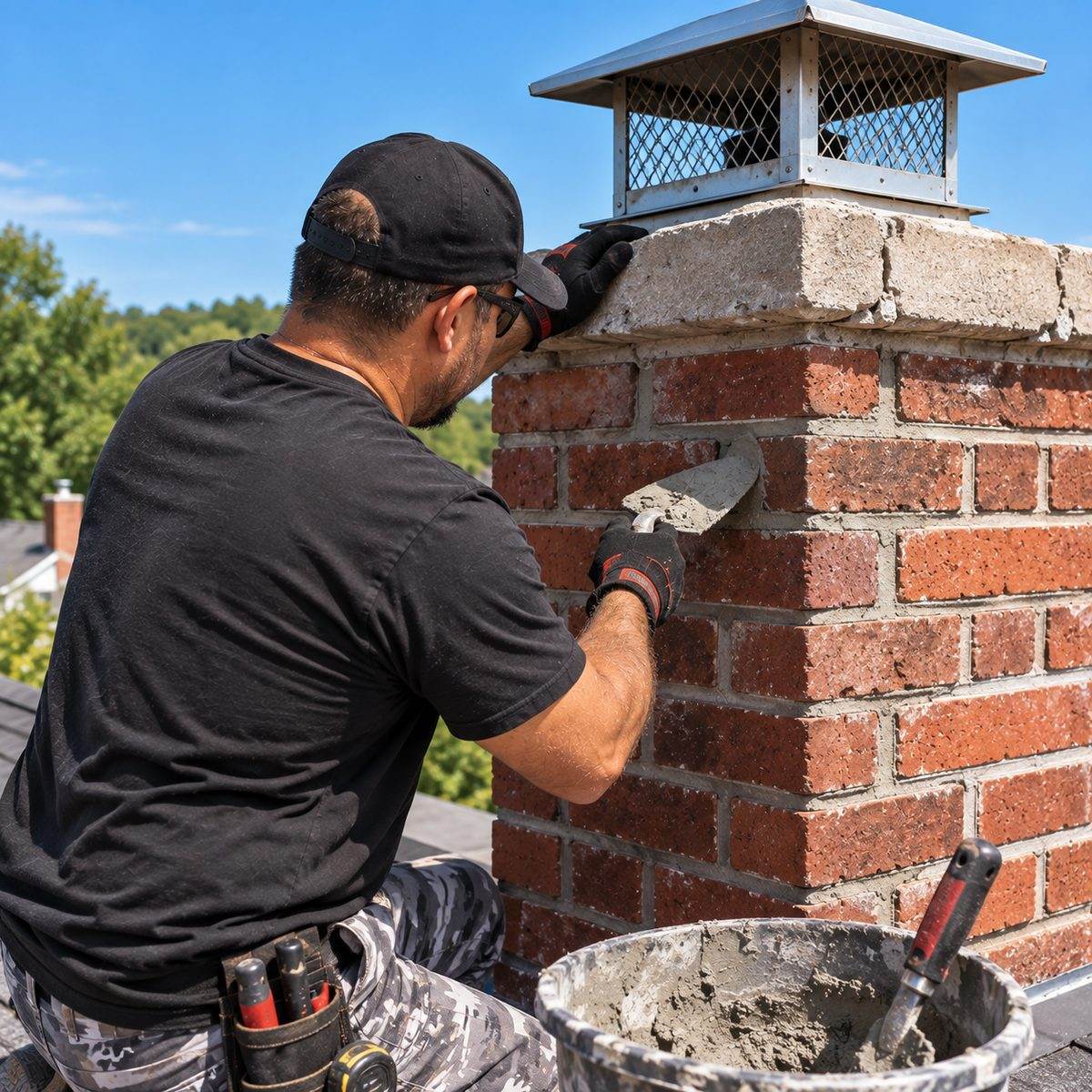
Brick veneer does not make the interior chimney masonry. Conversely, a metal cap at the top does not make every chimney factory-built; masonry flues also use metal caps. The roof and top assembly need context.
Do not climb onto the roof to identify the system. Ground-level images may show chase siding, a metal cover, clay tiles, or chimney pipe. A professional inspection can document closer details with safe access.
Labels and manuals are powerful evidence
A factory-built fireplace should have manufacturer and model information somewhere specified by its manual. The label may be near controls, behind a screen, along the opening, or in another accessible location. Record it exactly without dismantling trim or panels.
Use the model to obtain the installation, owner, and service-parts manuals from the manufacturer. Majestic’s support system, for example, asks for the model number to retrieve the correct documents. Other brands have their own portals. Majestic manuals and user guides.
If the label is missing or unreadable, keep any construction records, permits, warranty cards, and prior invoices. Do not assign a model based solely on a photo match; products can look almost identical while using different chimney and panel parts.
Masonry fireplaces are assemblies, too
Calling a fireplace masonry does not mean every material can be repaired with ordinary mortar. The firebox uses heat-appropriate units and joints. The throat, damper, smoke chamber, flue liner, hearth, exterior masonry, crown, cap, and flashing have different functions.
A firebox repair or rebuild may address damaged firebrick and refractory joints. Smoke chamber parging may address suitable chamber surfaces. Clay-tile repair or relining deals with the flue. Tuckpointing and crown work address exterior masonry.
A repair should name the component instead of offering to “cement the fireplace.” Materials and geometry near direct flame differ from exterior brickwork exposed to weather.
Factory-built systems depend on specified components
Manufactured fireplaces are evaluated as complete systems. Firebox shells, refractory panels, chimney sections, elbows, firestops, supports, termination caps, doors, screens, and sometimes gas accessories must be compatible with the identified model. A pipe section that has the same diameter is not automatically interchangeable.
Prefabricated fireplace repair should therefore begin with model research and a parts check. Generic masonry can block cooling air spaces, change clearances, or conceal metal deterioration. Unapproved doors can affect airflow or heat.
Where original parts are obsolete, the options depend on manufacturer guidance, the condition of the unit, and whether an approved repair path exists. Age alone does not force replacement, but lack of verifiable compatible parts can matter.
Chimneys and venting cannot be mixed casually
A masonry flue can sometimes be relined for a suitable appliance under a designed system. A factory-built chimney uses listed sections and joints that should not be mixed between brands or series. Field-built adapters and screws in the wrong wall can compromise the assembly.
An insert placed into a masonry fireplace and an insert approved for a particular factory-built fireplace are not the same installation. The host fireplace, vent route, clearances, and manuals all need review before equipment is purchased.
If a wood-to-gas change, insert, stove connection, or other conversion is planned, arrange inspection first. The attractive unit on a showroom floor does not establish compatibility with the existing opening.
Water appears differently in the two systems
On masonry, water may enter through crowns, caps, mortar, brick, flashing, or roof details and show as dampness, efflorescence, or interior staining. On a framed chase, a corroded chase cover, failed collar, siding, roof flashing, or termination can wet sheathing, insulation, framing, chimney sections, and the metal fireplace.
Rust in a factory-built firebox deserves prompt attention. Do not sand and repaint before identifying the source and extent. A masonry unit can also contain metal dampers and lintels that corrode, so rust alone does not identify the construction type.
A chimney leak repair evaluation should label the assembly and trace likely paths. Replacing a cap will not automatically repair flashing or a chase cover.
Gas fireplaces introduce additional categories
Some gas units are direct-vent factory-built appliances that draw combustion air from outdoors and exhaust through a sealed vent. Others are vented gas logs installed in a masonry wood-burning fireplace. Vent-free products, where permitted, operate differently. A masonry-looking surround does not identify the gas appliance.
Heat & Glo’s venting overview describes direct vent as a system that brings combustion air from outside and sends exhaust outside through its vent. This is one manufacturer’s general explanation; the actual model manual governs. Heat & Glo venting overview.
Do not open sealed glass, rearrange logs, close a required damper, or modify gas controls based on fireplace appearance. Record model information and use qualified service.
Inspection scope should match the system
A fireplace inspection should first identify construction and fuel. For masonry, the scope may include firebox, hearth, throat, damper, chamber, liner, chimney exterior, and water-management components. For factory-built systems, it may include accessible panels, metal firebox, chimney components, chase, termination, doors, screens, and labels.
CSIA explains that inspection levels depend on continued use, changes, property transfers, and suspected damage. A Level 2 inspection may be appropriate after an appliance change or real-estate transaction. CSIA inspection levels.
Ask which components remain concealed and whether the installed system can be verified. “Looks good from the room” is not an evaluation of the chase or flue.
Previous renovations can hide important evidence
Stone veneer, new mantels, drywall, built-ins, and television installations can cover labels, air openings, cracks, or required clearances. A remodel may also route wiring or framing close to the fireplace. Do not drill into a chimney or chase based on an assumption about empty space.
Aftermarket glass doors, blowers, gas logs, and screens should be identified. In a factory-built unit, verify that accessories are approved. In masonry, doors still need correct fit and operating instructions.
If finish removal is necessary for inspection or repair, define who performs and restores it. A chimney contractor’s estimate may not include carpentry, tile, paint, or electronics.
Real-estate buyers should request system identity
Ask the seller for manuals, installation records, permits, prior inspection reports, and repair invoices. “Fireplace never used” does not establish condition. A clean firebox can conceal an unverified chimney, while soot does not identify construction.
A dedicated transaction inspection should occur while findings can still inform decisions. The report should state masonry or factory-built, fuel, visible model information, included flues, alterations, limitations, and recommended next steps. Avoid expecting a general home inspection to include every specialized internal condition.