
Dryer Vent Cleaning
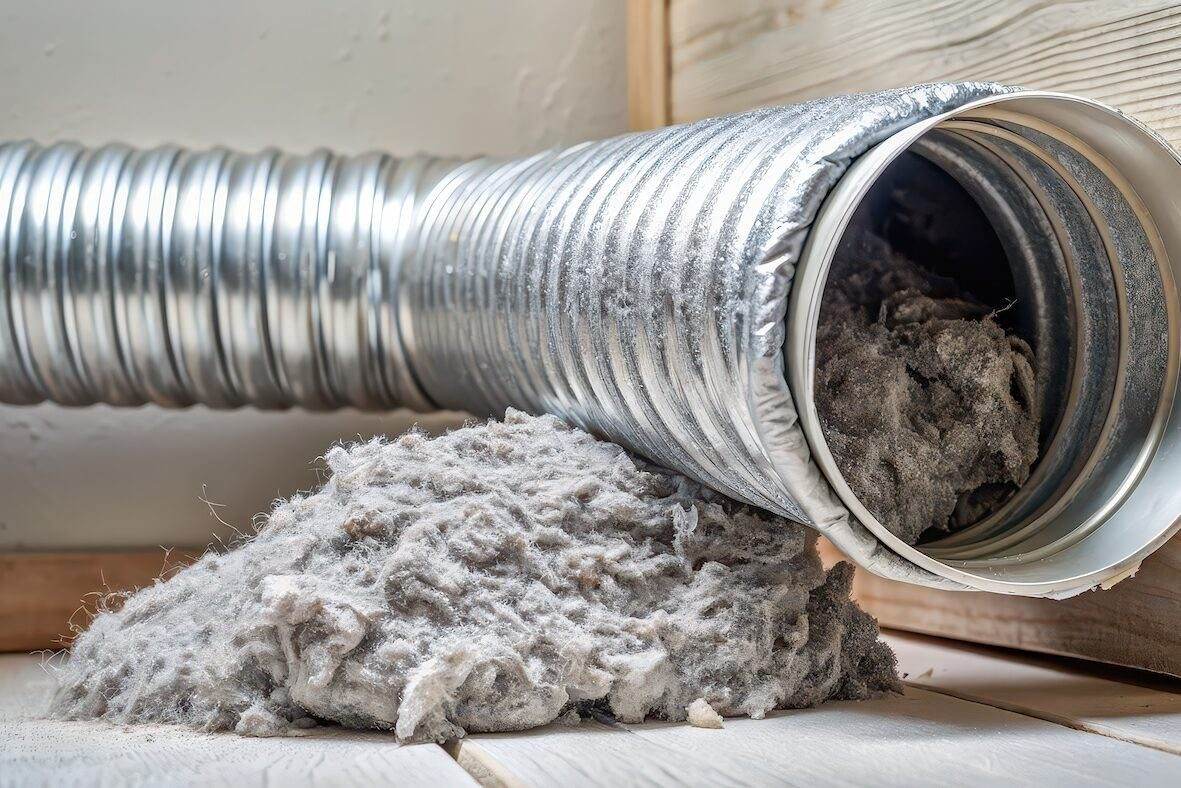
A dryer vent packed with lint is one of the most overlooked fire risks in a home, and it makes the dryer work harder and run longer.
A dryer vent packed with lint is one of the most overlooked fire risks in a home, and it makes the dryer work harder and run longer. We clear the full duct run so air moves the way it should and the lint isn't sitting there waiting for heat.
Signs you may need dryer vent cleaning
- Clothes take two cycles to dry, or come out hot and damp
- The laundry room feels hot or humid while the dryer runs
- There's a burning smell when the dryer is going
- The outside vent flap barely opens or is packed with lint
- It's been years, or never, since the vent was cleaned
What we check first
Good work starts with looking. Before we recommend anything, here is what we examine:
- The full duct path from the dryer to the exterior termination
- Lint volume and any crushed or kinked sections of duct
- The exterior vent hood and flap operation
- Whether the duct material and routing are appropriate
- Airflow before and after cleaning
How the work goes
Step
We locate the full run and the exterior termination
Step
We brush and vacuum the duct from end to end
Step
We clear the vent hood so the flap moves freely
Step
We check airflow to confirm the run is actually clear
Step
We point out any crushed duct or routing that should be corrected
What can change the scope
Length and routing drive the job. A short, straight run cleans quickly; a long duct with elbows, or one buried in a wall or ceiling, takes more work. Crushed or improper duct won't stay clear no matter how well it's cleaned, so we'll flag that.
Missouri considerations
Missouri humidity means dryers already work hard, and a clogged vent makes it worse — longer cycles, more heat, more risk. Clearing the run helps the dryer breathe and cuts the fire hazard sitting behind the wall.
Keeping it in good shape
Clean the lint screen every load, and plan on a vent cleaning about once a year for a busy household. If drying times start creeping up again, that's your cue.
What a thorough inspection actually tells you
It helps to know the difference between cleaning and inspection before you book. Cleaning removes creosote, soot, and debris; an inspection evaluates the condition of the components — crown, cap, flue lining, flashing, firebox, damper, and smoke chamber — within a defined scope. You can have a spotless flue that still has a cracked tile or a failing crown, which is why a clean chimney is not the same thing as an inspected, sound one.
Inspection levels describe scope and access, not a grade. A Level 1 fits a familiar system in continued use; a Level 2 adds a camera pass through the flue and is the right call after a home purchase, a fuel or appliance change, a chimney fire, or when a hidden condition is suspected. A good visit ends with more than "we cleaned it" — you should get a plain-language read on what's fine, what to watch, and what genuinely needs work, with photos of anything that matters and an honest note about any surface that couldn't be seen.
Frequently Asked Questions
Related reading from our blog
- Dryer Vent Cleaning: Why Chimney Companies Offer It
Learn how lint, long runs, elbows, crushed ducts, and roof exits affect dryer vent performance. - Chimney Cleaning vs. Inspection: What You Are Booking
Compare chimney cleaning and inspection, understand camera work and service limits, and learn what documentation to request for your Missouri home.
Request dryer vent cleaning
Tell us what's going on and we'll follow up to confirm details and set a time.
Ready to get on the schedule?
Tell us what's going on and we'll help you sort it out. Two Missouri hubs, 24/7 phone availability.