
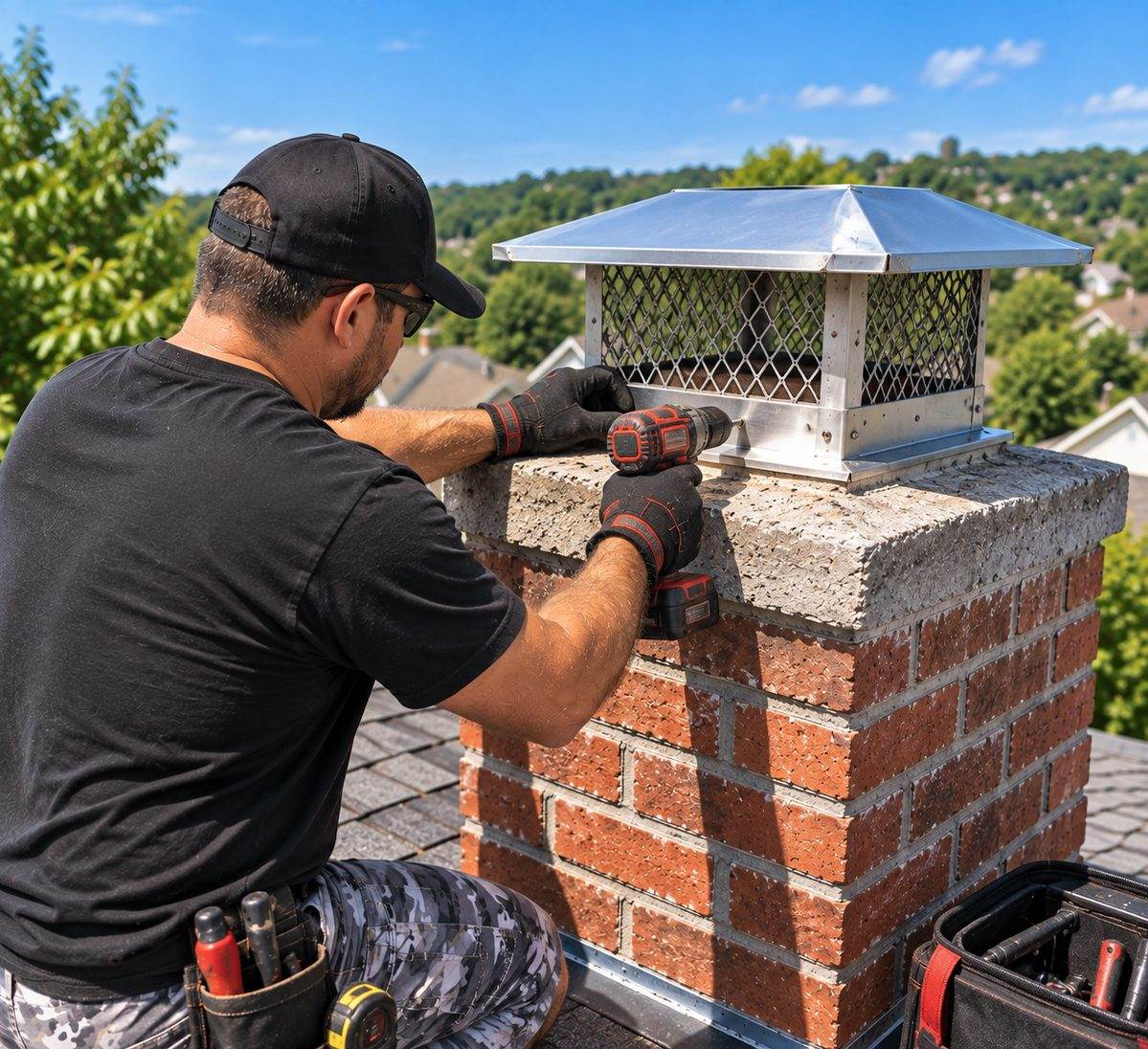
Top-Sealing Damper Installation
A top-sealing damper mounts at the top of the flue and closes with a rubber gasket, sealing far tighter than a worn throat damper.
A top-sealing damper mounts at the top of the flue and closes with a rubber gasket, sealing far tighter than a worn throat damper. It doubles as a cap when closed, keeping out rain and animals, and it's a strong upgrade when your existing damper won't seal or you want to stop year-round energy loss.
Signs you may need top-sealing damper installation
- Your throat damper won't seal and drafts come down the flue
- You feel cold air or notice energy loss from an unused fireplace
- The existing damper is rusted or beyond repair
- You want a cap and a tight seal in one component
- Animals or rain have been getting into an open flue
What we check first
Good work starts with looking. Before we recommend anything, here is what we examine:
- Flue size and top condition for a proper mount
- Whether the crown or chase top is sound enough to mount to
- The existing damper and why it's failing
- Access for operating the damper from the firebox
- Whether top-sealing suits your chimney better than a throat repair
How the work goes
Step
We measure the flue and check the mounting surface
Step
We select a top-sealing damper sized to your flue
Step
We mount it at the flue top and run the control cable
Step
We set it up to open and close from the firebox
Step
We confirm a tight gasket seal when closed
Materials & options
A top-sealing damper is a spring-loaded, gasketed unit that mounts at the flue top and is operated by a cable from the firebox. Because it seals with a gasket rather than metal-to-metal, it typically closes much tighter than a throat damper and also caps the flue.
What can change the scope
The install depends on flue size and the condition of the crown or chase top it mounts to. If that mounting surface needs repair first, we'll address it. It's a great fit when sealing and capping are both goals.
Missouri considerations
For Missouri's swing between hard winters and hot summers, a tight top seal keeps conditioned air in and weather out year-round. Sealing at the top also keeps the whole flue drier than a throat damper does.
Repair or replace?
If your throat damper won't seal, a top-sealing damper is often the better upgrade than repairing the old one — it seals tighter and caps the flue at the same time. We'll compare both for your situation.
Keeping it in good shape
Operate the cable gently and have the gasket checked at your annual inspection. The gasket is what makes the tight seal, so keeping it in good shape matters.
How the flue, liner, and damper work together
The flue is the passage that carries heat and combustion byproducts out of your home, and the liner is its inner shield — it protects the surrounding masonry and framing and helps the appliance vent correctly. When a liner cracks, gaps, or is the wrong size for a new appliance, heat and byproducts can reach places they shouldn't, which is why a camera inspection usually comes before any liner recommendation. Sizing matters as much as material: a liner has to match the appliance and fuel, not just fit the existing opening.
The damper controls that passage from below. A damper that won't seal lets your heated and cooled air escape up the chimney year-round; a rusted one is also a moisture clue, since it usually means water is getting past a failing cap or crown. Whether the answer is repairing a throat damper, adding a top-sealing damper, relining, or parging a rough smoke chamber, the goal is the same — a flue that drafts cleanly when you want it and seals tightly when you don't.
Frequently Asked Questions
Related reading from our blog
- Throat Dampers vs. Top-Sealing Dampers
Compare throat and top-sealing fireplace dampers, learn how each operates, and understand when repair, replacement, or draft diagnosis may be appropriate. - When a Top-Sealing Damper Makes Sense
Explore the benefits and limitations of top-sealing dampers for Missouri masonry fireplaces. - Fireplace Insert Installation Planning Guide
Plan a gas or wood insert around host-fireplace approval, full measurements, output, clearances, hearth, venting, liners, power, finish, and service access.
Request top-sealing damper installation
Tell us what's going on and we'll follow up to confirm details and set a time.
Ready to get on the schedule?
Tell us what's going on and we'll help you sort it out. Two Missouri hubs, 24/7 phone availability.