
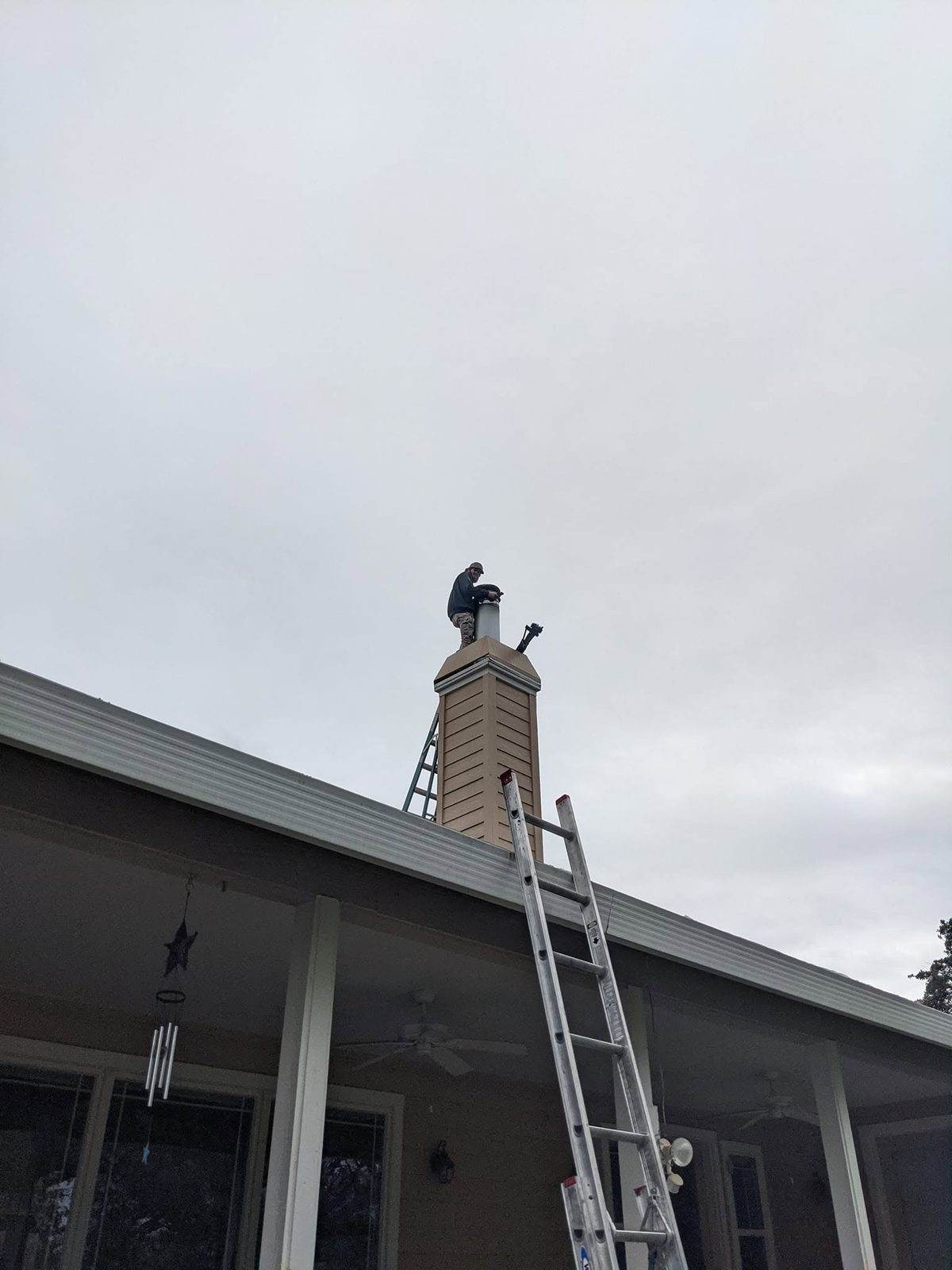
A throat damper that no longer seals can allow noticeable air movement when the fireplace is idle. Top-sealing damper installation places the closure at the chimney top and operates by cable from the firebox. When compatible, it may reduce air leakage and help limit rain and animal entry while closed.
It is not appropriate for every system. The fireplace type, flue, existing cap, gas components, venting requirements, and accessibility must be reviewed. The damper must open reliably before combustion, and users need clear operating instructions.
If the existing assembly is otherwise serviceable, chimney damper repair may be enough. Smoke spillage still requires draft and smoke diagnosis; a tighter closed damper does not solve all open-fire draft problems.