Chimney Repair
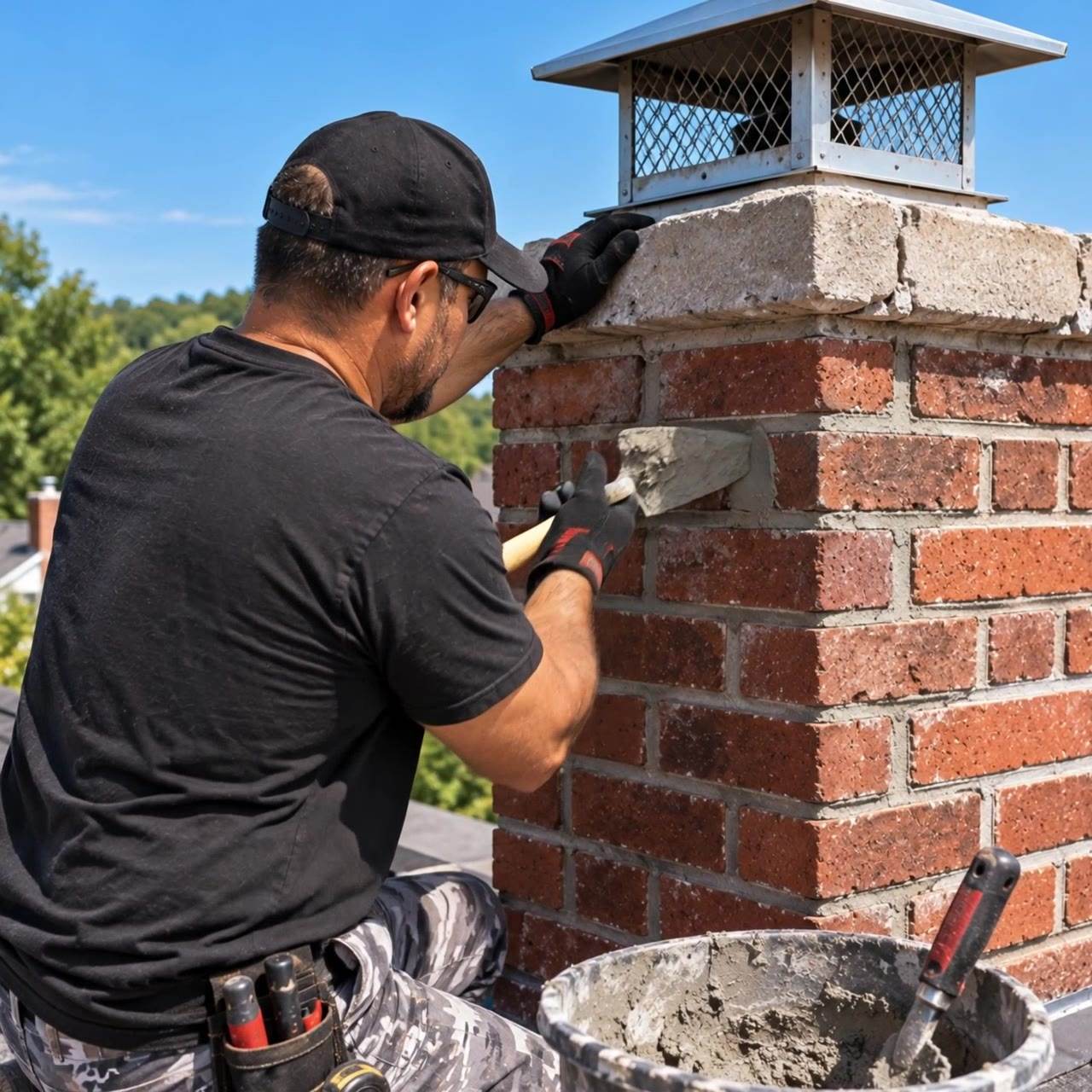
"Chimney repair" covers a lot of ground — a cracked crown, failing mortar joints, a rusted cap, loose flashing, a spalling stack.
"Chimney repair" covers a lot of ground — a cracked crown, failing mortar joints, a rusted cap, loose flashing, a spalling stack. The work that lasts starts with figuring out why it failed, because sealing over a moisture problem just hides it until next winter.
Signs you may need chimney repair
- You see cracks, gaps, or crumbling mortar on the chimney
- Brick faces are flaking or popping off (spalling)
- Water stains are showing up on interior walls or the ceiling
- The crown or cap is visibly cracked, rusted, or missing
- The chimney looks like it's leaning or shifting
What we check first
Good work starts with looking. Before we recommend anything, here is what we examine:
- Where water is actually getting in — crown, cap, joints, or flashing
- Mortar joint condition and depth of deterioration
- Brick and masonry for spalling and freeze-thaw damage
- The crown for cracks and proper overhang
- Structural signs like leaning, separation, or step cracking
How the work goes
Step
We inspect inside and out to find the source, not just the symptom
Step
We prioritize what's letting water in, since that drives most damage
Step
We match materials and mortar to the existing masonry
Step
We make the repair and address the water path together
Step
We show you what we did and what to keep an eye on
What can change the scope
Scope depends entirely on what failed and how far it's spread. A single cracked crown is one job; widespread spalling and joint failure across a tall stack is another. We don't quote a repair without seeing where the water is coming from, because that changes everything.
Missouri considerations
Freeze-thaw is the number-one enemy of Missouri masonry. Water soaks into a crack or open joint during a wet stretch, freezes overnight, expands, and widens the gap. Repeat that a few dozen times a winter and a small crack becomes a real repair.
Repair or replace?
If damage is localized and the structure is sound, a targeted repair is usually the right call. When spalling and joint failure are widespread, or the stack is shifting, a rebuild of the affected section can be the more honest long-term fix. We'll lay out both.
Keeping it in good shape
Once the water path is closed, waterproofing sound masonry helps it shed the next storm. A yearly look keeps new cracks from quietly reopening the door.
Why water is the problem behind most chimney repairs
Almost every masonry chimney repair traces back to the same culprit: water. A chimney sheds rain through a layered system — the crown throws water off the top, the cap covers the flue opening, the flashing seals the roof joint, and sound mortar joints keep the brick from soaking it up. When any one of those fails, water gets in, and Missouri's freeze-thaw winters do the rest, expanding inside cracks and joints until a hairline gap becomes spalled brick or a leak on your ceiling.
That's why the honest first step is finding where the water actually enters, not sealing the nearest stain. A leak that only shows in wind-driven rain points to flashing; one that appears after any rain often points to the crown or brick. Repairs that last address the entry point and match materials to the existing masonry — mortar matched in strength and color, brick matched in size and profile. Once the water path is closed, breathable waterproofing on sound masonry buys years of protection, but it is never a substitute for a real repair.
Frequently Asked Questions
Related reading from our blog
- Common Chimney Repair Estimate Questions
Ask better questions about scope, materials, access, hidden conditions, cleanup, and documentation before chimney work. - Why Chimney Repairs Should Address the Cause
See why durable chimney repair connects visible damage to water, movement, heat, venting, or material compatibility. - Repair Before Replace: When It Works and When It Does Not
Learn when targeted chimney repair can preserve sound work and when replacement is the more responsible option.
Request chimney repair
Tell us what's going on and we'll follow up to confirm details and set a time.
Ready to get on the schedule?
Tell us what's going on and we'll help you sort it out. Two Missouri hubs, 24/7 phone availability.