Chimney Flashing Repair
Flashing is the metal that seals the joint where the chimney passes through the roof.
Flashing is the metal that seals the joint where the chimney passes through the roof. It's one of the most common places a chimney leaks, and the leak often shows up as a stain on a ceiling that's nowhere near the fireplace. Getting the flashing right stops water at that seam.
Signs you may need chimney flashing repair
- Water stains on the ceiling or wall near the chimney
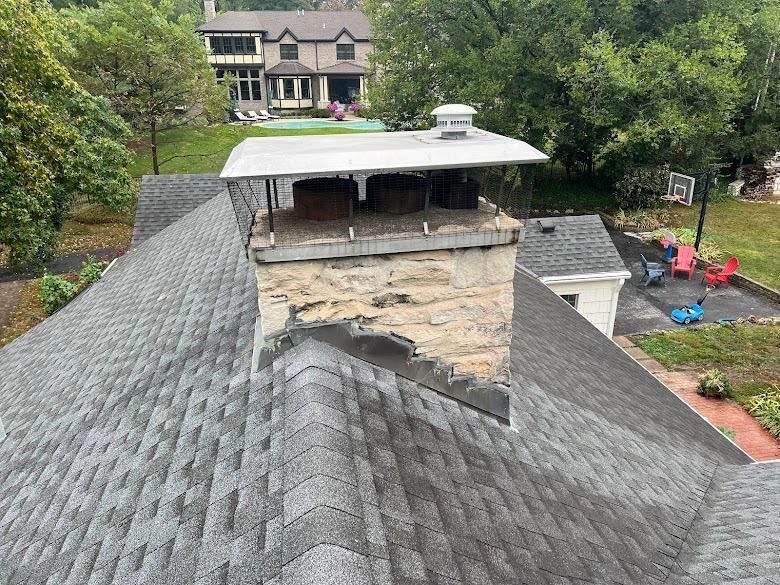
- Rusted, lifted, or missing metal at the roof-to-chimney joint
- Old caulk or tar 'repairs' that keep failing
- Leaking that only shows up in wind-driven rain
- Shingles around the chimney are damaged or loose
What we check first
Good work starts with looking. Before we recommend anything, here is what we examine:
- Condition of the step flashing and counter flashing
- Whether flashing is properly integrated or just surface-sealed
- The seal where counter flashing meets the masonry
- Roofing condition immediately around the chimney
- Whether past patch repairs are the actual source
How the work goes
Step
We trace the leak to confirm flashing is the source
Step
We remove failed flashing and old patch material
Step
We install or reset flashing that's properly layered
Step
We seat counter flashing into the masonry and seal it
Step
We test the joint and check the surrounding roofing
What can change the scope
The fix ranges from resealing sound flashing to replacing a poorly installed system. Tar-and-caulk patch jobs are common and usually need to be redone properly. If the roofing around the chimney is also failing, that may need a roofer, and we'll say so.
Missouri considerations
Missouri storms drive rain sideways into the chimney-roof joint, and freeze-thaw lifts poorly seated flashing over time. A seam that a smear of caulk 'fixed' last year is often the leak we find this year.
Repair or replace?
Sound flashing that's just lost its seal can be reset. Flashing that was never properly integrated, or is rusted through, needs replacing. A proper layered install outlasts any amount of sealant.
Keeping it in good shape
After the flashing is sealed, waterproofing the masonry and keeping the crown and cap sound closes the other water paths. Check the flashing after major storms.
Why water is the problem behind most chimney repairs
Almost every masonry chimney repair traces back to the same culprit: water. A chimney sheds rain through a layered system — the crown throws water off the top, the cap covers the flue opening, the flashing seals the roof joint, and sound mortar joints keep the brick from soaking it up. When any one of those fails, water gets in, and Missouri's freeze-thaw winters do the rest, expanding inside cracks and joints until a hairline gap becomes spalled brick or a leak on your ceiling.
That's why the honest first step is finding where the water actually enters, not sealing the nearest stain. A leak that only shows in wind-driven rain points to flashing; one that appears after any rain often points to the crown or brick. Repairs that last address the entry point and match materials to the existing masonry — mortar matched in strength and color, brick matched in size and profile. Once the water path is closed, breathable waterproofing on sound masonry buys years of protection, but it is never a substitute for a real repair.
Frequently Asked Questions
Related reading from our blog
- Why Chimney Flashing Repairs Fail
Learn why surface sealant patches often fail and what durable chimney flashing repair must consider. - Chimney Crown Repair vs. Rebuild in Missouri
Learn how crown condition, drainage, construction, and surrounding masonry help determine whether a Missouri chimney crown can be repaired or should be rebuilt. - Common Chimney Repair Estimate Questions
Ask better questions about scope, materials, access, hidden conditions, cleanup, and documentation before chimney work.
Request chimney flashing repair
Tell us what's going on and we'll follow up to confirm details and set a time.
Ready to get on the schedule?
Tell us what's going on and we'll help you sort it out. Two Missouri hubs, 24/7 phone availability.