
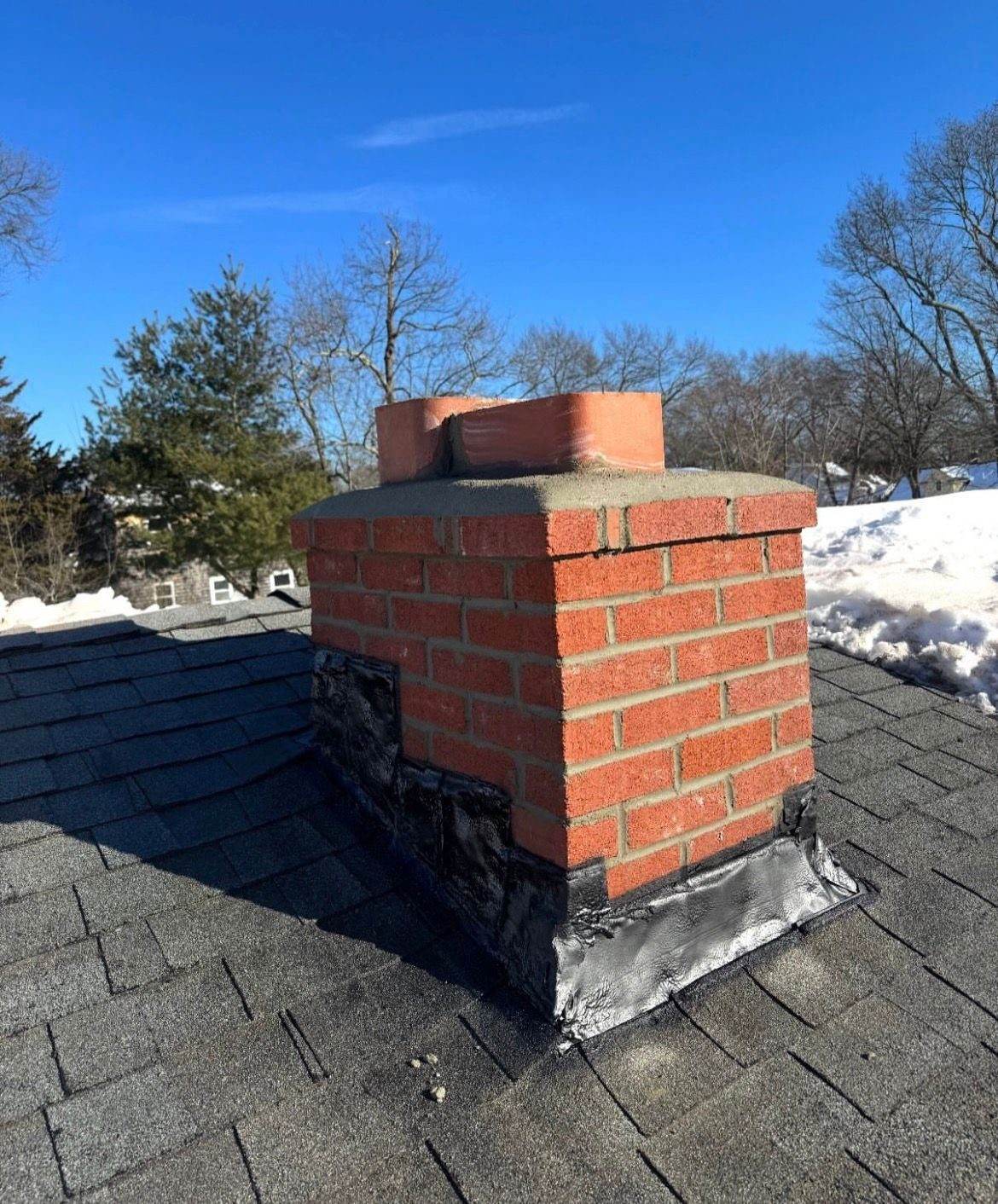
Flashing must manage water where masonry meets roofing while allowing the building to move. A bead of sealant across a visible gap may stop one rain, but it can fail when ultraviolet exposure, thermal movement, poor adhesion, or trapped water stresses the patch.
Durable chimney flashing repair considers step flashing, counterflashing, roof slope, roofing material, masonry joints, corners, cricket conditions, and the path water follows. The crown and masonry should also be checked; flashing can be blamed for water entering higher on the chimney.
Before approving work, ask which component failed, how new metal will integrate with roofing and masonry, and whether surrounding materials are sound. Chimney leak repair is most effective when the diagnosis precedes the patch.