“We need the chimney serviced” is a reasonable way to start a phone call, but it does not define what should happen during the appointment. A homeowner may want soot removed before winter, evidence about a damaged liner, an explanation for a leak, or information before buying a house. Those are different objectives. Understanding the difference between cleaning and inspection helps you book the right visit, compare estimates fairly, and recognize what the resulting paperwork actually establishes.
In plain language, chimney sweeping and cleaning deals with deposits and debris. A chimney inspection evaluates the system within a stated scope. The services often belong together, but neither should be silently substituted for the other.
On this page
- What a cleaning service is intended to accomplish
- What inspection is intended to establish
- Why the order can depend on conditions
- A camera is a tool, not the whole conclusion
- Match the appointment to the question
- What cleaning cannot repair
- Compare estimates by scope, not package names
- St. Louis and Kansas City homes need system-specific questions
- Know what to receive when the visit ends
- Frequently asked questions
What a cleaning service is intended to accomplish
Cleaning addresses material that should not remain in the venting path, using methods appropriate to the particular system and condition. That does not mean every dark surface must become bright or every historic stain can be removed. The objective concerns deposits and obstructions, not a showroom appearance inside a used fireplace.
Describe the appliance before accepting a cleaning quote. An open masonry fireplace, a wood insert, and a stove with a connector arrangement may require different access and procedures. In UK guidance, HETAS emphasizes that professional sweeping equipment and techniques should suit the lining system. That general principle is useful here, although UK service frequencies are not Missouri rules. HETAS: how chimney sweeping works.
Ask which portions are included and how access limitations will be handled. A proposal that refers only to cleaning the visible firebox should not be mistaken for work on the entire flue. If a blockage or difficult deposit requires a different procedure, you should receive an explanation of the revised scope before assuming the original price covers it.
What inspection is intended to establish
Inspection is a process of observing, evaluating, and documenting components within defined access limits. It can identify a need for cleaning, but its purpose is broader than measuring soot. It may raise questions about a connection, lining condition, exterior defect, or change in the system's use.
The scope matters. CSIA's Level 1 procedure describes routine evaluation of readily accessible portions under continued conditions. Its Level 2 procedure adds access and investigation appropriate to changes or other qualifying circumstances. These are not interchangeable labels for a quick look and a long look; they describe different assignments. CSIA Level 1 procedure, CSIA Level 2 procedure.
Ask the provider to state the inspection level, relevant components, and any expected access limitations. A report should separate what was observed from what remains unknown. “No issue visible from this opening” is a narrower conclusion than “the entire system has been evaluated.”
Why the order can depend on conditions
Sometimes deposits obscure surfaces that need examination. Cleaning can then improve visibility for further evaluation. In other situations, an initial observation may identify a condition that changes how access or cleaning should proceed. There is no useful homeowner rule that one service must always occur first in exactly the same way.
The important question is whether the provider explains the sequence and its purpose. If camera images were taken before cleaning, ask whether deposits limited interpretation and whether additional viewing is needed afterward. If work stopped because of a concern, ask what was completed, what remains incomplete, and whether the appliance should remain unused. That information prevents a partial visit from being mistaken for a finished maintenance cycle.
A camera is a tool, not the whole conclusion
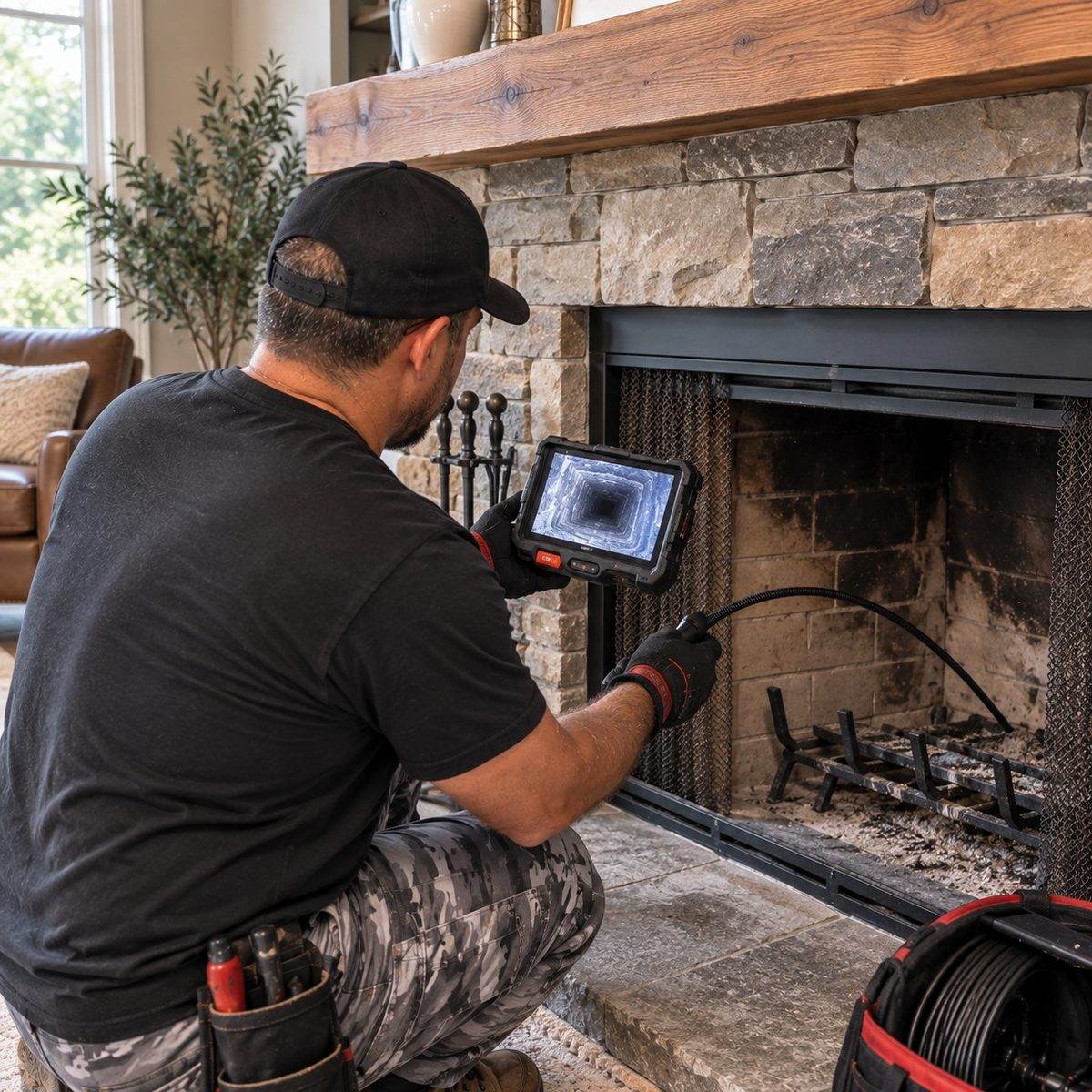
A Level 2 camera chimney inspection can provide evidence about internal surfaces that are difficult to see from the fireplace opening. However, owning a camera does not define an inspection's complete scope, and a video does not interpret itself.
Useful documentation identifies the flue, direction of travel, relevant locations, and observed findings. If a close-up shows a dark line, the report should explain what the evaluator believes it represents and whether more information is necessary. A homeowner should not be expected to diagnose structural or lining defects by studying an unlabelled recording. Ask for an understandable interpretation, not simply a collection of alarming images.
Match the appointment to the question
Consider three common situations. A familiar fireplace with no reported changes is due for routine evaluation, and the findings may establish whether cleaning is needed. A fireplace that smokes into the room raises an operating question that may require draft and smoke diagnosis, even if cleaning is also warranted. A property purchase calls for information about condition and limitations before the buyer relies on the system.
In the third situation, a dedicated real estate chimney inspection has a different purpose from ordering a sweep because the fireplace looks dirty. Tell the provider that a transaction is involved, share deadlines, and ask what documentation will be available. Do not ask for a routine cleaning and assume it automatically answers every purchasing question.
What cleaning cannot repair
Removing deposits does not replace a damaged component, correct an incompatible assembly, or solve every airflow complaint. If a report recommends repair, the proposal should connect that recommendation to a documented condition rather than merely to the fact that cleaning was performed.
Equally, discovering an issue does not mean the entire chimney must be replaced. A targeted correction may be appropriate, or further investigation may be necessary before deciding. Ask what the proposed task changes and what it leaves untouched. This distinction is especially helpful when a quote combines cleaning, inspection, and repair under one total. You should still be able to understand the individual reasons for the work.
Compare estimates by scope, not package names
Two “chimney service” offers may include very different deliverables. One may address only a single flue; another may include an additional appliance, camera documentation, or exterior access. Neither comparison is meaningful until the actual work is described.
Request written answers to a few questions: Which appliance and flue are included? Which inspection level is proposed? Is cleaning included only if necessary? What happens if access is restricted? What photographs or report will be provided? Are repair estimates separate? Avoid treating a longer list of marketing labels as evidence of better value. Clear scope and useful documentation matter more than how many names appear in the package.
St. Louis and Kansas City homes need system-specific questions
Regional service should not mean every Missouri fireplace receives an identical procedure. A masonry fireplace in an older home, a listed factory-built unit inside a framed chase, and an insert connected through an existing chimney can present different access and documentation needs. The system should be identified before deciding which tools and methods fit.
Tell the service provider about recent roofing, conversions, renovations, or prolonged inactivity. If there are two fireplaces, identify both rather than assuming the chimney visible above the roof represents only one flue. The household history can make the initial scope more accurate, but it cannot replace observations at the property.
Know what to receive when the visit ends
The completion record should state which tasks were actually performed, what conditions were found, what limitations remained, and whether further action is recommended. Keep that record separately from an estimate for work that has not yet happened. A signed proposal is not evidence that all listed repairs were completed.
Record the date, appliance, and individual flue as well, especially when the property contains more than one system.
If the appliance should remain unused, ask for that instruction clearly in writing. If additional evaluation is required, clarify who will provide it and which question remains unanswered. A successful appointment leaves you with more than a clean hearth: it leaves you able to explain what was done and what the next decision is.