
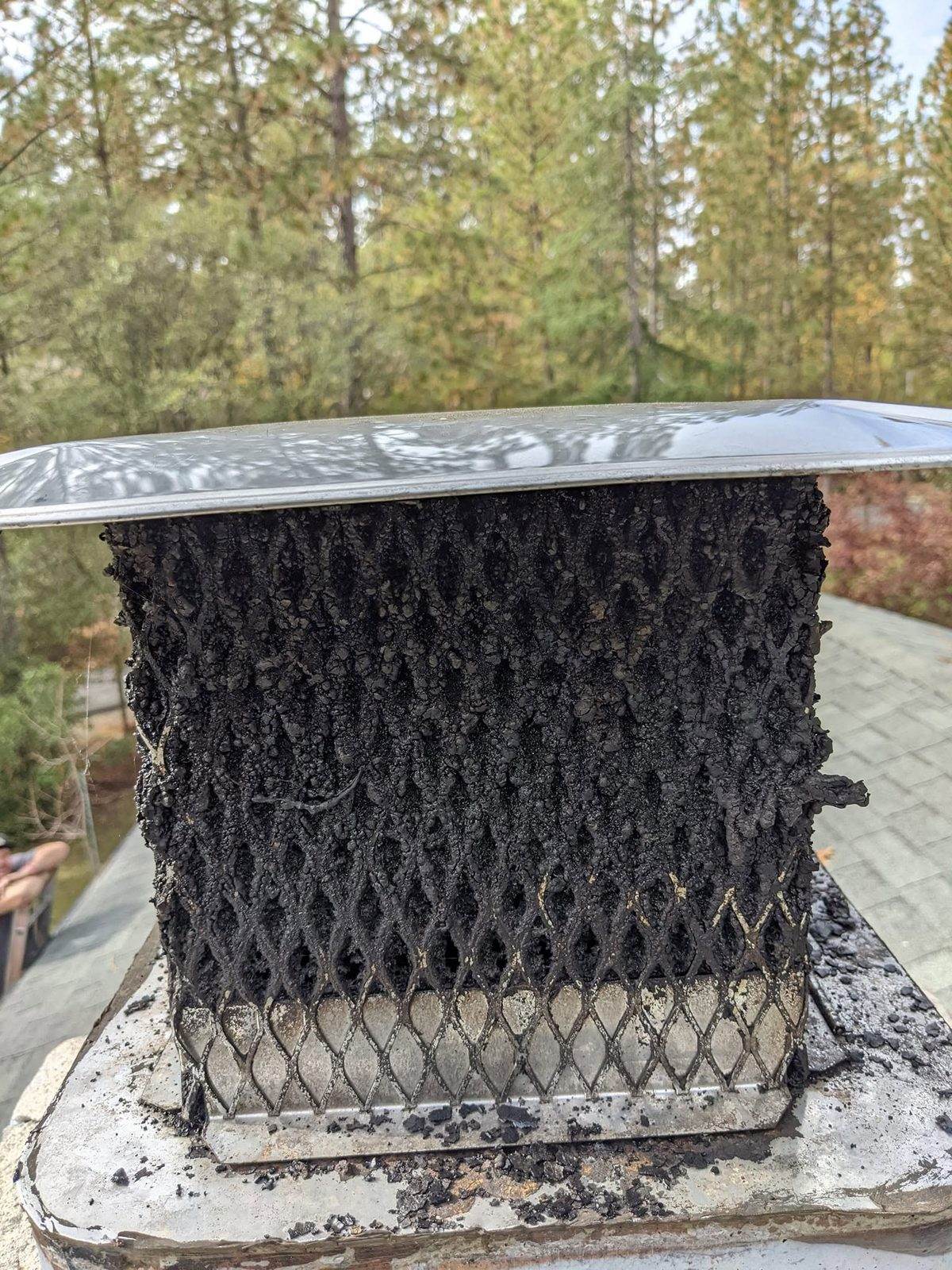
Creosote is a combustible residue associated with wood-burning exhaust. It develops as smoke and other combustion products travel into a cooler venting system and material condenses or collects on internal surfaces. Homeowners often imagine one uniform black coating, but deposits can differ in appearance, texture, location, and difficulty of removal. A photograph from the fireplace opening cannot reveal every surface or determine the condition of the entire chimney.
The practical goal is not to assign a dramatic “stage” from an online picture. It is to understand why deposits are forming, have the system evaluated within an appropriate scope, and remove material when needed using methods suited to that system.
On this page
- Creosote begins with combustion, not with a dirty-looking hearth
- Wet wood can create a chain of poor conditions
- Smoldering is not a cleaning strategy
- The chimney itself affects deposit patterns
- Creosote is not identified reliably from one color word
- Cleaning decisions should follow condition and system type
- Chemical products do not replace inspection
- Recognize a suspected chimney fire
- Missouri homeowners can reduce avoidable contributors
- Use documentation to find patterns
- Frequently asked questions
Creosote begins with combustion, not with a dirty-looking hearth
Wood contains moisture and complex organic material. When it burns, heat releases gases, particles, water vapor, and other products. Under cooler or incomplete-burning conditions, more of that material can reach the flue without being fully burned. As exhaust moves through the chimney, residue can adhere to surfaces.
That is why two households with similar fireplaces may develop deposits at different rates. Firewood condition, fire size, air supply, appliance operation, chimney route, flue temperature, and household habits interact. The amount of ash visible in the room is not a dependable measurement of what has accumulated above it.
Wet wood can create a chain of poor conditions
Part of the fire's energy must drive moisture from fuel before that energy can support useful heat and cleaner combustion. Wet wood tends to burn less efficiently and produce more smoke. EPA's archived Burn Wise guidance recommends wood below 20 percent moisture and explains that firewood should be seasoned and stored off the ground with the top covered while the sides remain open. EPA: best wood-burning practices.
The same underlying principle appears in European manufacturer guidance. Schiedel explains that wet wood can lower combustion temperature and increase smoke, condensate, soot, and creosote-related conditions. That source is informative, but its European installation rules are not Missouri requirements. Schiedel: chimney and combustion FAQ.
Fuel moisture is one variable, not a complete diagnosis. Dry wood cannot correct an obstructed flue, an unsuitable liner, or an appliance operated outside its instructions. If heavy deposits keep returning, the answer should include the system and operating pattern, not only a lecture about firewood.
Smoldering is not a cleaning strategy
Keeping a wood fire very low for long periods can produce cooler, smokier exhaust. Conversely, trying to “burn the chimney clean” with an unusually intense fire can ignite deposits and expose the system to a chimney fire. Do not use either extreme as maintenance.
Operate the fireplace, stove, or insert according to its manual. Controls, door position, loading amount, and approved fuel can differ by product. If you do not have the manual, use the manufacturer and model number to find the correct version rather than following instructions for a similar-looking appliance. Never disable a control, leave a door in an unapproved position, or use gasoline, kerosene, or charcoal starter to accelerate a fire.
The chimney itself affects deposit patterns
Exhaust loses heat as it travels. Exterior exposure, an oversized flue, long routes, or other design and installation factors can influence performance. Manufacturer documents repeatedly connect correct flue sizing and configuration with draft and deposit control. DuraVent, for example, warns in its product guidance that improperly sized chimney systems can contribute to poor draft and excessive creosote. That does not mean a DuraVent instruction governs a different product; it illustrates why the connected appliance and vent must be treated as one system. DuraVent DuraChimney II information.
A homeowner should not choose a liner size or alter chimney height based on a blog. If recurring deposits raise a venting question, provide the appliance label and existing records so the evaluator can compare the system with applicable manufacturer information and local requirements.
Creosote is not identified reliably from one color word
Online descriptions may call deposits powdery, flaky, tar-like, or glazed. Those words can help communicate observations, but they do not substitute for close evaluation. Lighting, camera exposure, soot, ash, and the underlying flue material can change how a photograph appears.
A chimney inspection should document relevant deposits and accessible system conditions. A Level 2 camera chimney inspection may be justified when the inspection scope calls for detailed internal viewing, but a camera cannot remove deposits or make obscured surfaces visible through them. Ask how the findings were identified and whether cleaning is required before a complete interpretation is possible.
Cleaning decisions should follow condition and system type
Chimney sweeping and cleaning removes suitable deposits and debris with tools and procedures appropriate to the flue or venting system. CSIA's homeowner resources discuss inspection annually and cleaning as needed, and describe one-eighth inch of sooty buildup or any glaze as conditions requiring attention. CSIA homeowner resources.
Do not interpret a numerical threshold as permission to ignore shiny or unusual deposits below it, or as an invitation to scrape the flue yourself. The deposit type, system material, access, and possible damage matter. Factory-built chimney manufacturers may specify acceptable brush materials and maintenance steps. DuraVent's DuraPlus 2 instructions, for example, warn that chemical products do not eliminate periodic inspection and cleaning and specify brush considerations for that named product. Always follow the actual system's instructions. DuraVent DuraPlus 2 instructions.
Chemical products do not replace inspection
A product marketed to modify deposits may have instructions and a defined purpose, but it cannot document a cracked tile, displaced joint, animal obstruction, or unsuitable connection. It also does not turn unknown chimney conditions into known conditions. Avoid claims that one log or powder makes professional evaluation unnecessary.
If a product was previously used, tell the service provider which one and how often. Do not mix products or apply a chemical to a gas appliance or another system for which it was not intended. Keep the original packaging and follow its warnings. A maintenance decision should be based on the chimney and appliance, not on advertising language alone.
Recognize a suspected chimney fire
Some chimney fires are dramatic, with roaring, vibration, flames, or sparks. Others may not be recognized during operation. CSIA explains that chimney-fire temperatures can damage liners, mortar, and masonry and that an affected chimney needs evaluation before reuse. CSIA: facts about chimney fires.
If you suspect a chimney fire, get everyone out and call emergency services. Do not climb onto the roof, pour water down the chimney, or continue the fire to “see whether it settles.” After the emergency, do not resume use simply because the system looks normal from the room. A damage event changes the inspection question, and internal evaluation may be appropriate before repair decisions are made.
Missouri homeowners can reduce avoidable contributors
Start with fuel that suits the appliance and is properly dried. Store the main supply outside, off the ground, with airflow and protection from precipitation. Measure a representative log on a freshly split interior face when using a moisture meter; a dry exterior can hide a wetter center. Keep household trash, treated lumber, painted wood, plywood, and glued products out of the fire.
Follow the appliance's loading and air-control instructions. Keep required areas clear of combustibles. Dispose of ash only as directed, recognizing that embers can remain hot. The U.S. Fire Administration recommends a lidded metal ash container stored outside and away from the home. USFA fireplace and wood-stove safety card.
These steps reduce avoidable problems, but they do not certify the vent. Continue annual inspection and condition-based cleaning. Report smoke, odor, unusual sounds, or rapid deposit return rather than compensating with more fuel or a hotter-than-approved fire.
Use documentation to find patterns
Keep the cleaning date, inspection report, approximate usage, and changes in firewood supply. If deposits return sooner than expected, those records help compare operating conditions. Note whether a new appliance, liner, home renovation, or exhaust fan appeared during the same period.
A pattern does not prove a single cause, but it makes the investigation more focused. Ask the provider to separate deposit removal from the question of why the deposits accumulated. The first service can address current buildup; the second question may involve fuel, operation, draft, sizing, damage, or several factors together.