
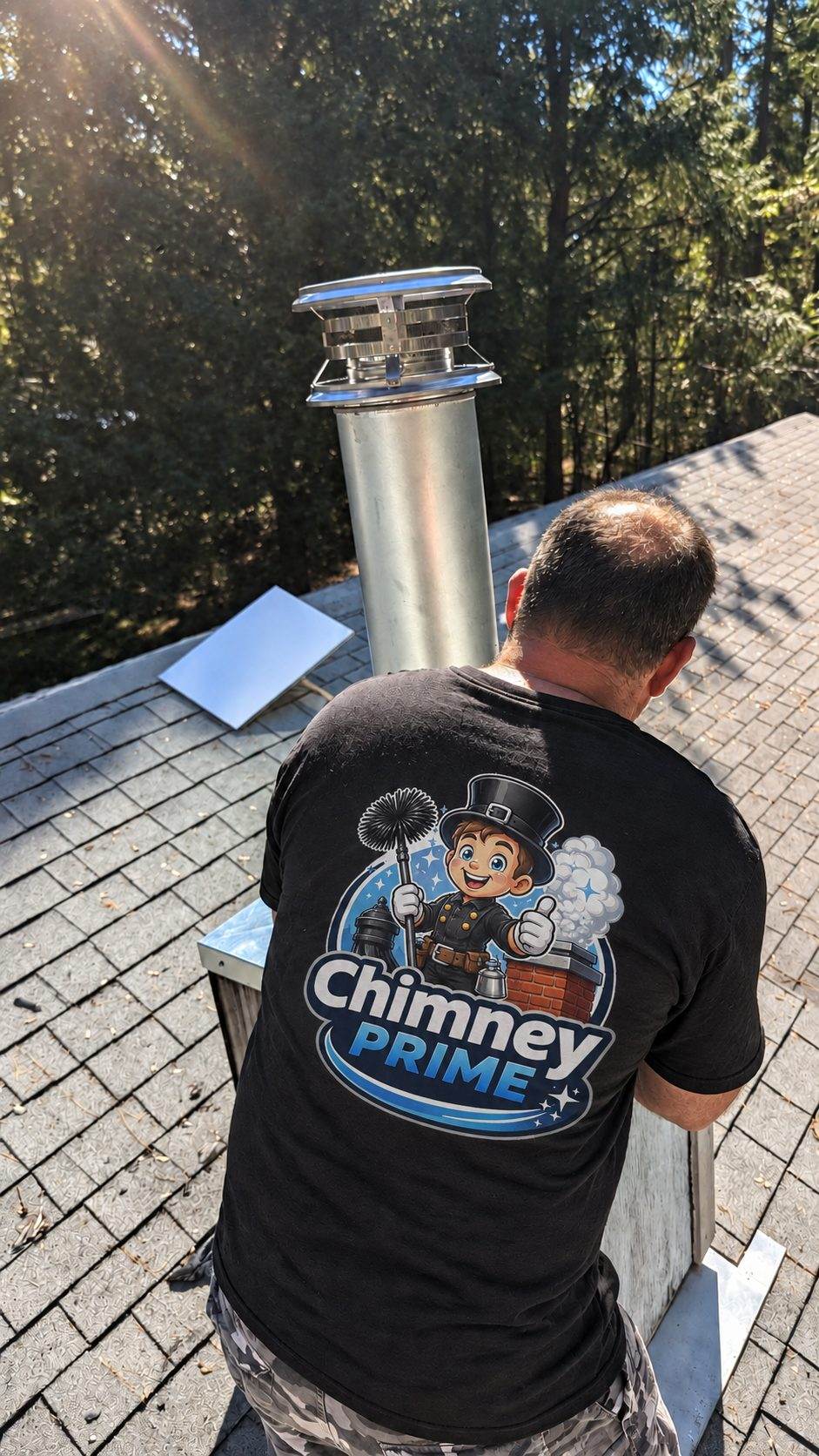
A chimney liner is the passage that carries combustion products from an appliance or fireplace toward the outdoors. It also separates those hot, corrosive, or moisture-laden gases from surrounding masonry and nearby building materials within the limits of the system’s design. Because most of the liner is hidden, homeowners often hear about it only when a camera image shows a crack or an appliance installer asks whether the existing flue is compatible.
“Needs a liner” is not a complete recommendation. The next questions are which appliance the flue serves, what lining exists now, what condition it is in, how the proposed system was sized, whether insulation or clearance provisions are required, and how it will be connected and documented. A sound chimney liner installation is designed around the actual venting application rather than the largest tube that fits through the chimney.
On this page
- A chimney structure and its liner are different components
- What a liner is expected to accomplish
- Clay tile is common, durable, and not indestructible
- Stainless-steel liners are systems, not generic sheet metal
- Factory-built chimneys are not masonry liners
- Inspection level depends on the reason for the visit
- Sizing is an engineering and manufacturer question
- Insulation and clearance questions cannot be skipped
- Connections at the appliance and top are critical
- Fuel changes require a new compatibility review
- Common warning signs are not liner diagnoses
- Repair, resurface, reline, or replace are different scopes
- Keep records for the next inspection or appliance change
- Frequently asked questions
A chimney structure and its liner are different components
The exterior brick stack is not automatically the gas passage. Inside a masonry chimney, a liner may be made from clay flue tiles, a listed metal system, or another approved lining method. A framed chase may contain a factory-built chimney assembled from specified sections rather than a masonry flue. Some older chimneys may be unlined or have an incomplete lining, but that cannot be established from age alone.
One chimney structure can contain several flues. A basement appliance, living-room fireplace, and second fireplace may each have a separate passage within the same masonry stack. An inspection or estimate should identify the particular flue, appliance, floor, and termination. A finding in one passage does not establish the condition of its neighbor.
Ask photographs and reports to label direction and location. “Crack in chimney” is vague; “vertical crack in the north clay tile approximately one tile above the smoke chamber” provides context for discussion and later comparison.
What a liner is expected to accomplish
The liner contains and directs combustion products. It must tolerate the temperatures and condensates associated with the fuel and appliance, remain continuous as required, and connect appropriately at the bottom and top. Its dimensions influence draft and the temperature of vent gases. Its relationship to the chimney and combustible construction is part of the system.
No liner makes every surrounding defect irrelevant. A metal reline does not rebuild loose exterior brick, correct flashing, or replace a failing crown. Conversely, a beautiful masonry rebuild does not repair a cracked flue inside. A complete recommendation separates these scopes while explaining how they interact.
A liner also cannot make an appliance suitable for a space or correct an unsafe connector route by itself. Appliance listing, input, connector, chimney height, offsets, air supply, and termination all participate in performance. This is why shopping only by liner diameter can be misleading.
Clay tile is common, durable, and not indestructible
Clay flue tiles are installed in sections, typically within a masonry chimney, with joints between them. They tolerate normal service well when properly constructed and used, but they can crack from thermal shock, damaging chimney fires, movement, impact, poor support, or other conditions. Mortar at joints can be missing, eroded, or displaced.
The shape may be rectangular, square, round, or another configuration, and offsets can limit access. A flashlight view from the firebox sees only part of the passage. Tile fragments in a firebox or cleanout deserve prompt investigation, but absence of fragments does not prove the full liner is intact.
Some localized conditions may be candidates for clay flue tile repair using a method appropriate to the location and system. Extensive cracking, displacement, dimensional problems, or inaccessible defects may point toward relining instead. The proposed method should be connected to documented location and extent.
Stainless-steel liners are systems, not generic sheet metal
A listed stainless liner system includes more than flexible tubing. It can involve specific alloy, thickness or construction, connectors, tees, supports, top plates, terminations, insulation, and installation instructions. Flexible and rigid sections serve different configurations. The appropriate product depends on fuel, appliance, route, and existing chimney.
Manufacturers publish system-specific limits and component requirements. DuraVent’s DuraFlex stainless guidance, for example, directs the installer to match the inner diameter to the appliance outlet, confirm permitted configurations in the appliance instructions, and comply with clearance and code requirements. That page illustrates the decision process; it does not mean DuraFlex is installed or appropriate at a particular Chimney Prime property. DuraVent DuraFlex stainless information.
Do not accept “it’s stainless” as the entire specification. Ask for manufacturer, product line, alloy or approved fuel application, diameter, insulation method, connectors, listing documentation, and warranty terms. Product warranties vary, and this article makes no warranty promise.
Factory-built chimneys are not masonry liners
A factory-built chimney consists of listed, model-specific sections and parts installed with required supports, firestops, clearances, enclosures, and termination. It should not be casually “relined” with a masonry product or mixed with similar-looking components from another brand. Some manufacturers offer specific relining applications, but those instructions must be followed exactly.
Identify labels or documentation without removing panels or entering an unsafe area. If the model cannot be verified, the evaluator should state that limitation. Diameter alone does not prove compatibility; locking features, insulation, temperature rating, material, and tested assembly matter.
Framed chases also have water-management components such as a chase cover and storm collar. Rust or water around a factory-built fireplace may affect more than the chimney top and deserves system-specific evaluation.
Inspection level depends on the reason for the visit
A familiar, unchanged system under continued use may begin with the scope appropriate to a Level 1 inspection. A property transfer, appliance or fuel change, suspected chimney fire, or concern requiring internal detail may call for a Level 2 scope. Inspection levels describe access and circumstances, not a pass/fail grade.
A Level 2 camera chimney inspection can document visible internal surfaces, tile joints, cracks, offsets, restrictions, and connections. The camera is a tool within an inspection; video alone does not identify every material or determine repair without interpretation.
CSIA’s inspection guidance explains that a Level 2 inspection is appropriate for changes to the system and certain damaging events and property transfers. The provider should state the level, included flues, access, and limitations before work. CSIA inspection-level guidance.
Sizing is an engineering and manufacturer question
A liner that is too large may allow gases to cool excessively, weaken draft, or contribute to condensation in some applications. A liner that is too small can restrict flow or fail to vent the appliance adequately. Open fireplaces, wood inserts, stoves, gas appliances, oil equipment, and other systems use different sizing methods and constraints.
Relevant inputs can include appliance type and rating, outlet size, fuel, chimney height, offsets, connector length and rise, flue shape, fireplace opening, and manufacturer instructions. For an open fireplace, sizing is not based simply on the old tile dimensions. For a listed appliance, its manual may limit reductions, offsets, and connection arrangements.
Do not select a diameter from an online chart without confirming which standard, fuel, and appliance that chart addresses. The installer should show how the proposed size was derived and which instructions or requirements support it.
Insulation and clearance questions cannot be skipped
Some liner installations require insulation to meet the liner’s listing, address clearance conditions, maintain gas temperature, or satisfy the application. Insulation can be a wrap, poured product, or another system-specific method. Whether it is required depends on the listed system, existing chimney, clearances, fuel, and project design.
Ask whether the existing masonry chimney has verified clearance to combustible construction and how that was determined. Where conditions are concealed, the report should identify the limitation rather than assume clearance exists. The solution is not always the same insulation package, but the question must be addressed.
Insulation also occupies space. A liner that barely fits without it may not fit as a compliant insulated assembly. Offsets, mortar projections, and tile dimensions need evaluation before materials are ordered. Crushing or omitting insulation to force a system through changes its design.
Connections at the appliance and top are critical
At the bottom, the liner must connect to the appliance, insert, connector, or fireplace transition using components and access appropriate to the system. A connection hidden behind a block-off area still needs to be secure and serviceable as required. Flexible liner should not be loosely dropped near an outlet and called connected.
At the top, support, weathering, termination, and cap details matter. The top plate or support must fit the chimney and liner system. Rain must be managed without trapping water in the masonry or obstructing the vent. A generic cap should not replace a required termination component.
If the chimney has multiple flues, top work must preserve appropriate separation and outlet relationships. The installer should identify which termination belongs to each appliance and provide completed photographs.
Fuel changes require a new compatibility review
An existing flue that served one appliance should not be assumed suitable for a new one. Converting from an open wood fireplace to an insert, changing from oil to gas, or installing a high-efficiency appliance can change gas temperature, moisture, pressure, connector, sizing, and material requirements.
Some modern appliances produce cooler exhaust that can condense in a large exterior masonry flue. Certain condensates can be corrosive. Other appliances require entirely different vent categories and may not use a traditional chimney at all. The appliance manual and qualified design control.
Before purchasing equipment, coordinate the appliance and venting evaluation. Otherwise, the homeowner may own an insert that cannot be connected as expected or require unplanned tile removal, insulation, or masonry work.
Common warning signs are not liner diagnoses
Smoke spillage, poor draft, odor, staining, condensation, tile fragments, and rapid deposit formation can involve the liner, but each can also have other causes. Water entry, wet fuel, appliance operation, house pressure, blockage, cap condition, and connector problems may contribute.
If a carbon-monoxide alarm sounds, anyone feels ill, a gas odor is present, or a chimney fire is suspected, leave the building and contact emergency services or the gas utility as appropriate from a safe location. Do not relight the system to gather evidence.
After the immediate danger is resolved, provide the event history during inspection. CSIA’s chimney-fire material notes that high temperatures can crack clay tiles and displace mortar, sometimes without an obvious dramatic event. CSIA chimney-fire information.
Repair, resurface, reline, or replace are different scopes
Localized flue repair may address specific accessible defects. A resurfacing system may be proposed for certain continuous conditions under its listing and limitations. Relining installs a new listed passage within the chimney. Tile removal may be needed when space or geometry prevents the chosen assembly from fitting. Exterior chimney reconstruction is a separate scope.
Ask the proposal to name the method, product, supported application, preparation, inspection findings, and limitations. “Seal the liner” is too vague. A repair should explain how the material reaches and treats the documented defect, how thickness is verified, and how the final passage is inspected.
Cost alone cannot make methods equivalent. They may differ in access needs, flue-area change, appliance compatibility, insulation, serviceability, and what existing damage they leave in place.
Keep records for the next inspection or appliance change
After chimney liner repair and relining, retain the manufacturer, product line, diameter, alloy or fuel rating, insulation information, connector details, installation instructions, photographs, permits where applicable, and completion or inspection documents. Place them with the appliance manual.
Those records help the next technician select proper cleaning equipment and evaluate future changes. They also prevent a buyer or installer from having to guess what is hidden inside the masonry. A top photograph alone rarely contains the complete specification.