
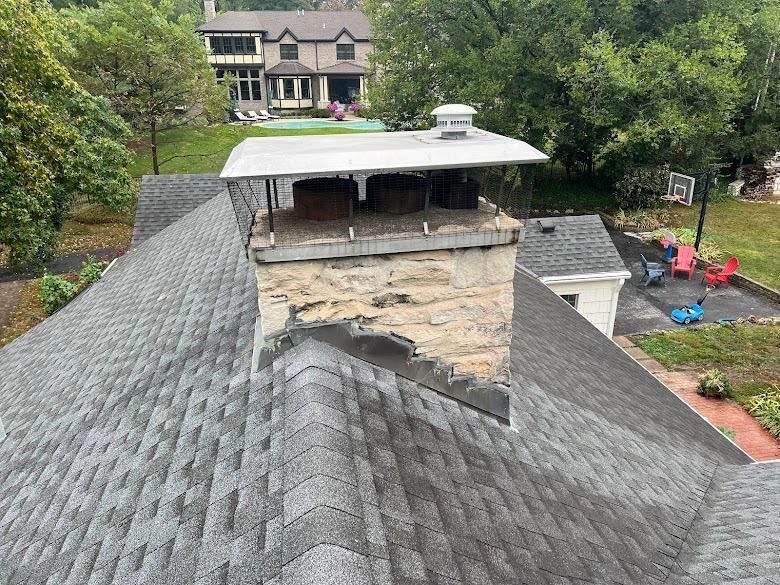
Water appears beside the fireplace after a storm, so the chimney must need a new cap—or perhaps more caulk around the roof. Both guesses are understandable. Neither is a diagnosis. A chimney passes through the building's weather protection and combines several materials, openings, and transitions. Water can enter above the visible stain, follow an indirect route, and appear indoors after a delay. The repair has to address that route, not simply the place where the water finally becomes obvious.
For a St. Louis homeowner, the most useful first step is a clear record of what happened. Note the timing, where water appeared, and whether the appliance was operating. Then arrange chimney leak repair evaluation with those observations available.
On this page
- First, describe the symptom precisely
- Rainfall patterns provide clues, not proof
- Distinguish the cap from the crown
- Understand the roof-to-chimney transition
- Masonry can show the history of moisture exposure
- A framed chase has different details
- Consider sources beside the chimney as well
- Why repeated surface patches can disappoint
- Prepare for an investigation without creating another hazard
- Verify the result and preserve the record
- Frequently asked questions
First, describe the symptom precisely
“The fireplace leaks” can mean several things: droplets inside the firebox, a damp hearth, a ceiling stain on another floor, wet trim beside the chimney, or moisture within a framed chase. Each description directs attention to a different set of possible routes. Take photographs of the location and a wider view of the room, if doing so is safe.
Keep people away from sagging ceilings, wet electrical equipment, or falling material. Do not operate a fireplace or gas appliance that has been affected by water until its condition is assessed. If there is an immediate electrical, gas, or structural hazard, use the appropriate emergency service rather than waiting for a routine chimney appointment.
Rainfall patterns provide clues, not proof
A leak that appears only in strong wind may differ from one that develops after hours of steady rainfall. Water following snowmelt raises another set of questions. These patterns are useful for planning an investigation, but they do not establish the defective component without further evidence.
Avoid conclusions such as “it only leaks with east wind, therefore the east flashing is definitely bad.” Wind, roof geometry, and water travel can complicate the route. Record observations in neutral language: when the rain began, when the stain appeared, which surfaces were wet, and when the area dried. That record remains useful even when the technician visits on a dry day.
Distinguish the cap from the crown
On a masonry chimney, the cap protects the flue opening while allowing exhaust to leave. The crown covers the top of the masonry around the flues. They are separate components, and one can be serviceable while the other is not. CSIA identifies caps, crowns, flashing, and masonry protection as distinct considerations in preventing water-related chimney damage. CSIA guidance on water penetration.
A missing or unsuitable cap can lead to discussion of chimney cap installation. A damaged crown may call for chimney crown repair or a chimney crown rebuild, depending on its condition. Ask the evaluator to show which component is involved. Replacing the cap does not automatically correct water entering through the material surrounding it.
Understand the roof-to-chimney transition
Flashing manages the junction between roofing and the chimney. That junction needs to work with the roof's drainage rather than merely look sealed from above. Deteriorated metal, an unsuitable previous patch, or a poorly integrated detail may warrant chimney flashing repair.
If the roof was recently replaced, provide the date and available work records. Do not immediately assume the roofing contractor caused the leak, or that old flashing must be responsible because it was not replaced. Ask how the current roof and chimney details connect and whether another trade needs to participate. A clear division of scope avoids two contractors each repairing one surface while the actual route remains unexplained.
Masonry can show the history of moisture exposure
Open joints, damaged brick faces, dark areas, and white deposits deserve documentation, but appearance alone does not identify the full source. A stained wall might be receiving water from above, absorbing rain through exposed areas, or showing the effect of an older condition. The investigation should consider the pattern and the surrounding details.
If mortar or units have failed, chimney masonry repair may be appropriate. Historic masonry guidance stresses that causes should be understood before repairs and that unsuitable mortar or aggressive treatment can create additional problems. NPS: common brick masonry problems. Do not treat a dense coating or paint as an automatic cure for every damp chimney wall.
A framed chase has different details
A factory-built fireplace may have a metal chimney enclosed within a framed chase. The broad metal top is the chase cover; a separate termination cap sits at the chimney outlet. Rust, damaged seams, poor drainage, or problems around the pipe penetration can prompt a chimney chase cover assessment.
The system must be identified before deciding which seams or spaces should be sealed. Some chimney assemblies require specific ventilation gaps and storm-collar details. DuraVent's DuraPlus instructions illustrate why a chase is not a place to apply a universal “seal every opening” rule. Those instructions apply to that named system, not every fireplace. DuraVent DuraPlus installation instructions.
Consider sources beside the chimney as well
Not every wet area near a chimney originates in the chimney. Nearby roofing, a plumbing route, or condensation can create a similar interior symptom. A responsible assessment should remain open to those possibilities, especially when the observed timing does not match rainfall.
Tell the evaluator if water appears while the appliance operates on dry days, after indoor humidity changes, or following work elsewhere in the building. These details may justify coordination with another trade. Identifying a different source is a useful result; it prevents spending money on chimney work that does not address the complaint. Do not ask a contractor to promise a chimney-only solution before the evidence supports one.
Why repeated surface patches can disappoint
A patch may cover the first visible gap without addressing the path feeding it. It can also make later diagnosis harder by concealing original joints and materials. That does not mean sealants have no legitimate use. It means their role should be part of a defined repair detail, not the entire explanation.
When reviewing an estimate, ask what failed, how the proposed repair manages water, and which nearby components are excluded. If chimney waterproofing is proposed, ask which product suits the masonry, what preparation is needed, and which defects must be corrected first. A treatment should not be described as fixing missing flashing, structural displacement, or a failed chase cover.
Prepare for an investigation without creating another hazard
Gather roof and chimney invoices, dated photographs, and any report describing earlier moisture concerns. Make the indoor affected area accessible. If you have safely accessible attic observations, share them, but do not enter unsafe spaces, step on unsupported surfaces, or expose yourself to wet wiring.
Do not climb a wet roof, spray the chimney with a hose as an improvised test, or dismantle gas equipment to look for water. Controlled testing and access should be planned by appropriate professionals because careless testing can introduce water in misleading ways. Your role is to provide a reliable history, not to reproduce the leak at any cost.
Verify the result and preserve the record
After repairs, keep photographs identifying the actual work and retain product or material documentation. Ask how the result will be assessed and what to do if moisture returns. Interior finishes may need separate attention, but do not erase the evidence before documenting the original condition.
A useful follow-up describes what changed: whether the same rainfall conditions occurred, whether water reappeared in the same place, and whether new symptoms developed elsewhere. “Still leaks” is important; “the original hearth stayed dry but a ceiling stain appeared after prolonged rain” gives much more direction. Accurate records help distinguish an incomplete repair from an additional water route that requires investigation.