A chimney can look straight and recently painted from the driveway while its crown, chase cover, liner, or roof intersection remains unknown. Indoors, a gas fireplace may light even though the exterior chase has water damage. For a Kansas City buyer, “Does it work?” is only one question. Construction, condition, venting, water management, and repair history determine whether the system can be relied on.
A specialized real estate chimney inspection should document what exists and what could be observed—not simply sell a cleaning or estimate. Schedule it early enough to review findings, obtain clarification, and compare meaningful repair scopes.
On this page
- Count appliances and flues
- Use ground-level exterior clues carefully
- Kansas City weather increases the value of moisture history
- Distinguish masonry stacks from framed chases
- Obtain the right internal inspection
- Review appliance and alteration records
- Interpret common findings by priority
- Repair and replacement are not the same conclusion
- Give factory-built systems a parts-and-label check
- Estimates do not replace condition reports
- Do not use the fireplace as a showing test
- Plan the first year of ownership
- Frequently asked questions
Count appliances and flues
Walk through the property listing and disclosures. Note every fireplace, stove, insert, furnace or water-heater connection that may involve a chimney, including basement and upper floors. One exterior stack can contain multiple separate flues.
Record fuel and visible labels. Determine whether each opening is masonry, factory-built, gas, wood, electric decoration, or decommissioned. A brick-pattern panel is not proof of masonry, and a framed chase can be faced with veneer.
Tell the inspector how many systems need inclusion. The condition of one flue does not establish its neighbor.
Use ground-level exterior clues carefully
From a safe location, look for leaning, displaced courses, spalled brick, open joints, white deposits, dark saturation, cracked crowns, missing caps, rust streaks, lifted chase covers, damaged siding, and flashing concerns. Compare listing photos from different years if available.
These clues do not establish the entire repair. White deposits can show moisture movement without proving structural failure. A rust streak can originate from a cap, fastener, chase cover, or other metal. A missing cap does not prove the liner below is damaged.
Do not walk the roof during a showing. Request professional access under the inspection agreement.
Kansas City weather increases the value of moisture history
Rain, wind, winter freezing, snow, and temperature swings expose chimney tops and roof intersections. Freeze-thaw damage depends on moisture entering porous or cracked material, not cold alone. Ask whether stains appear after wind-driven rain, prolonged saturation, or snowmelt.
Inspectors should distinguish active water entry from old discoloration. The repair may involve a crown, cap, flashing, chase cover, masonry, siding, or nearby roof detail. Water can travel before it appears inside.
A chimney leak repair proposal should connect the observed path to the chosen work. “Seal chimney” is not a complete diagnosis.
Distinguish masonry stacks from framed chases
A masonry chimney may have brick or stone walls, clay flues, crown, caps, and roof flashing. A framed chase commonly encloses factory-built metal chimney and ends under a sheet-metal chase cover with a termination above.
The repair rules differ. Masonry may need compatible mortar, selective brick, crown, liner, or flashing work. Factory-built systems need model-specific chimney sections, firestops, termination, panels, and clearance. A generic metal pipe cannot replace a listed component because it fits.
Rust inside a factory-built fireplace or on a chase cover deserves prompt evaluation. Do not paint over it before material loss and water path are documented.
Obtain the right internal inspection
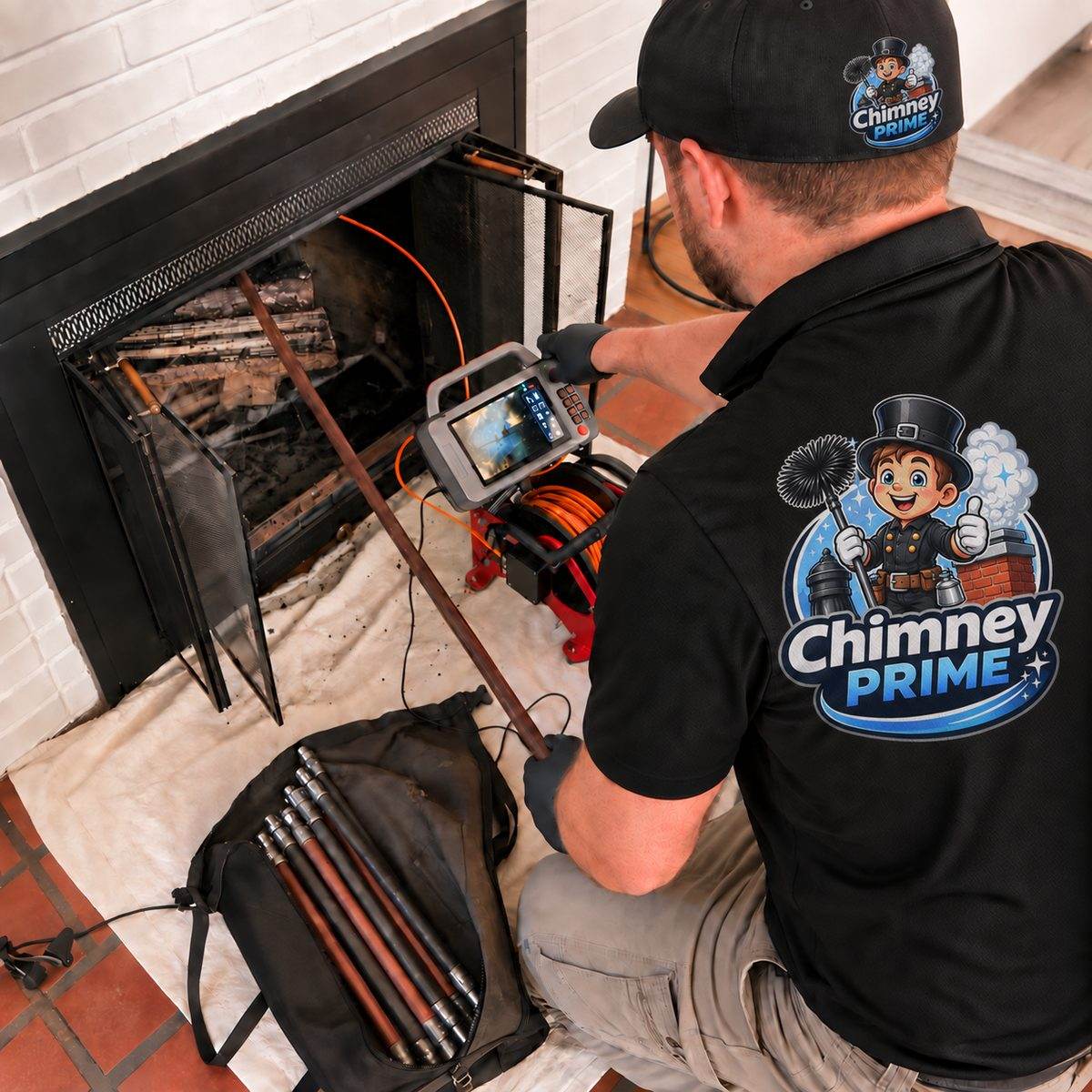
Property transfer is a common reason to discuss a Level 2 scope. A Level 2 camera chimney inspection can document visible liner surfaces, joints, offsets, obstructions, and transitions appropriate to the system and access.
CSIA’s inspection guidance describes Level 2 as relevant to property transfer, appliance or fuel change, and certain damaging events. It also distinguishes scope from a simple equipment upgrade. CSIA inspection levels.
Ask whether deposits limit visibility, whether cleaning is recommended before final interpretation, and which areas remain concealed. A camera does not see through tile or verify every clearance.
Review appliance and alteration records
Request manuals, model and serial information, installation records, permits, chimney-fire history, gas conversions, liner invoices, roof work, chase-cover replacement, masonry repair, and annual service. Confirm that documents match the installed unit.
A shiny stainless liner visible at the top does not reveal alloy, diameter, insulation, connector, or fuel rating. A gas insert surround can hide the old opening and vent connections. Records make future service more reliable.
If a remodel added a tight range hood, new windows, built-ins, or finish around the fireplace, mention it. Changes can affect house pressure, clearances, and access.
Interpret common findings by priority
Ask the inspector to group findings. Use-related items affect whether the appliance should operate now. Active water items prevent ongoing damage. Durability repairs preserve masonry or metal. Monitoring items need documentation and a future check. Optional upgrades concern convenience or appearance.
This prevents a missing decorative trim piece and a blocked flue from appearing equally urgent. It also prevents every old component from being labeled an emergency.
If the system should remain unused, obtain the instruction clearly in writing and understand what must occur before reevaluation.
Repair and replacement are not the same conclusion
Localized brick and joint deterioration may fit chimney masonry repair. Widespread displacement or deep failure may justify partial rebuilding. A cracked tile may fit a localized flue method or relining depending on extent. A corroded factory-built component may require a model-specific part or complete-unit discussion.
Request photographs and reasons linking each scope item to an observation. Ask what remains untouched. A cap replacement will not restore a cracked crown, and a liner will not stabilize loose exterior brick.
Obtain comparable bids for major work. Different totals often reflect different demolition limits, materials, access, or exclusions.
Give factory-built systems a parts-and-label check
Many Kansas City homes contain factory-built fireplaces surrounded by framing and an exterior chase rather than a traditional masonry chimney. Start by locating the appliance data label and recording the manufacturer, model, serial number, and fuel type. Then compare visible firebox panels, doors, louvers, chimney sections, termination, and accessories with the applicable manual where it is available.
Look for cracked or distorted refractory panels, corrosion, missing fasteners, damaged screens, altered cooling openings, disconnected vent parts, and water staining inside the chase. From the exterior, the chase cover, storm collar, cap, siding transitions, and roof flashing deserve attention. A decorative shroud or replacement cap must remain compatible with required airflow and termination clearances.
Parts availability can change the practical meaning of a defect. Some identified components may have an approved replacement; others may be obsolete or available only as part of a larger assembly. Do not repair a listed metal fireplace with a generic masonry patch or substitute an almost-fitting chimney section. If the label is missing or concealed, state what could not be verified and how that limits compatibility conclusions. Preserve label photographs and part numbers for future service.
Estimates do not replace condition reports
An estimate is written to price work. It may focus on the contractor’s proposed service and omit components outside that service. An inspection report should state observations, scope, and limitations even when no repair is sold.
Keep them separate during the transaction. First understand the condition; then evaluate whether the proposed response is targeted and sufficient. A seller’s prepaid cleaning does not automatically answer liner, water, or appliance questions.
Do not use the fireplace as a showing test
A quick fire can demonstrate that smoke rises under one set of conditions, but it does not prove liner integrity, clearance, or weather resistance. Do not light an unfamiliar wood fireplace before the inspection and any stated cleaning or repair.
Gas appliances should be operated only under the appropriate inspection procedure and manufacturer instructions. If gas odor, an alarm, or illness occurs, leave and contact emergency services and the utility from a safe place.
After purchase, follow written restrictions and cure times before first use.
Plan the first year of ownership
Create a folder for reports, images, manuals, permits, product details, completed invoices, and follow-up recommendations. Note approximate use and any smoke, odor, water, or noise changes.
Schedule the next inspection based on the system and report. Arrange condition-based cleaning. Recheck water repairs during later storms and exterior masonry after seasonal weather from the ground.
A useful baseline reduces future guessing and helps a later technician understand why work was done.